How a Korean Restaurant Actually Works
The mechanics of eating out in Korea — free refillable banchan, calling the server with a bell or 여기요, ordering by the 인분, paying at the front counter, and never tipping. What nobody tells you before your first meal.
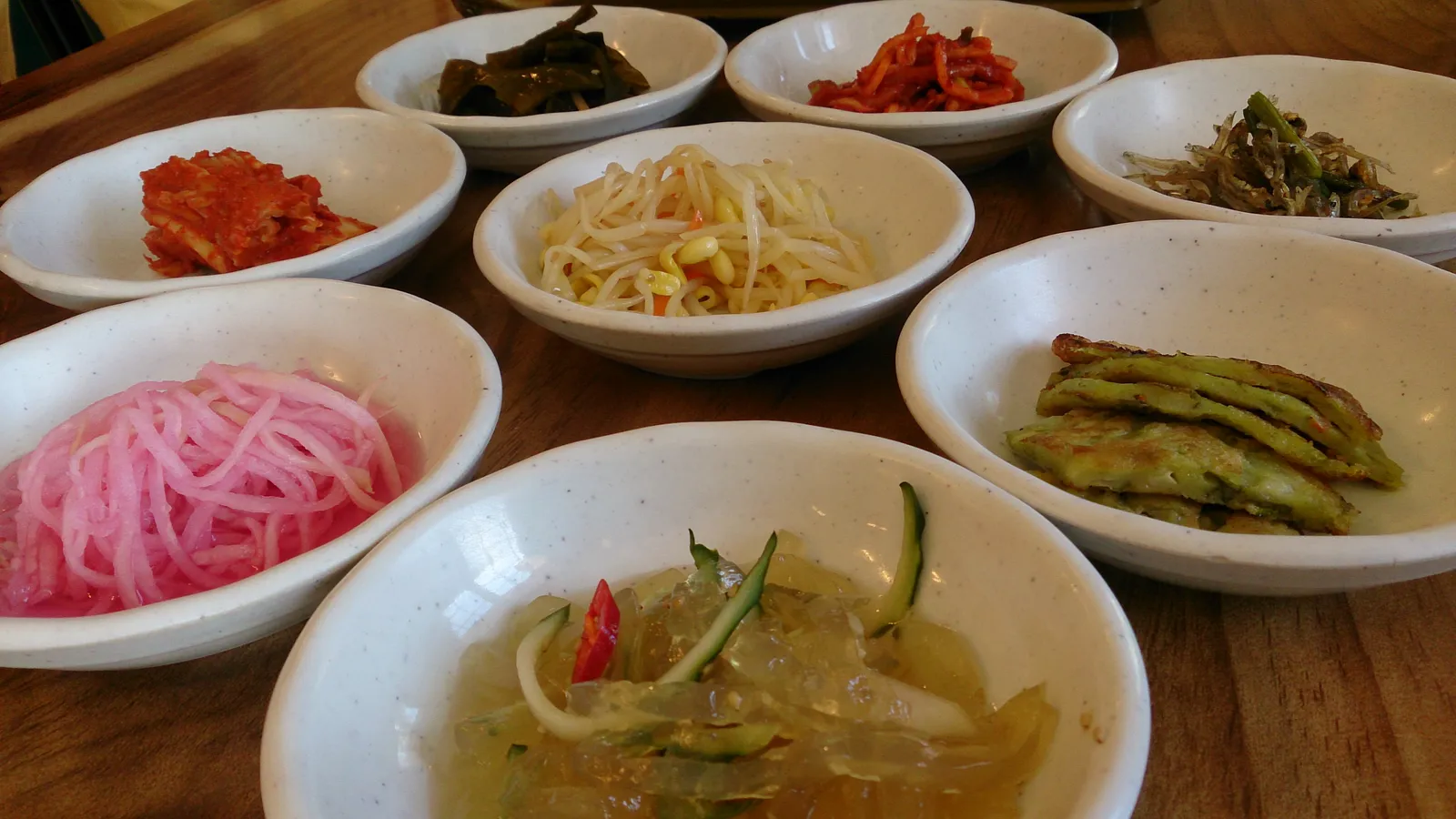
The food in Korea is easy to love on day one. The mechanics of a Korean restaurant are what quietly trip people up — you sit down and a dozen little dishes appear that you didn’t order, there’s no server hovering, and at the end nobody brings the bill to your table. None of it is complicated once you’ve seen it once. Here’s the whole flow.
The table comes half-set
Sit wherever there’s a free table unless someone waves you to one. Within a minute, whether you’ve ordered or not, the banchan (반찬) arrive: kimchi, seasoned bean sprouts, pickled radish, maybe a small pancake or a soy-braised something. They’re free, they come with the meal, and there’s no menu for them — you get what the kitchen is making that day.
A few things you’re expected to do yourself:
- Water. There’s usually a dispenser or a chilled bottle by the wall, with a stack of stainless cups. Pour your own. If there isn’t, ask — “물 좀 주세요” (mul jom juseyo).
- Cutlery. Spoon and chopsticks live in a drawer on the side of the table, or in a canister on top. Pull them out yourself.
- Napkins. Small, thin, and on the table already. Nobody brings you more — that’s normal, not neglect.
How to get the server’s attention
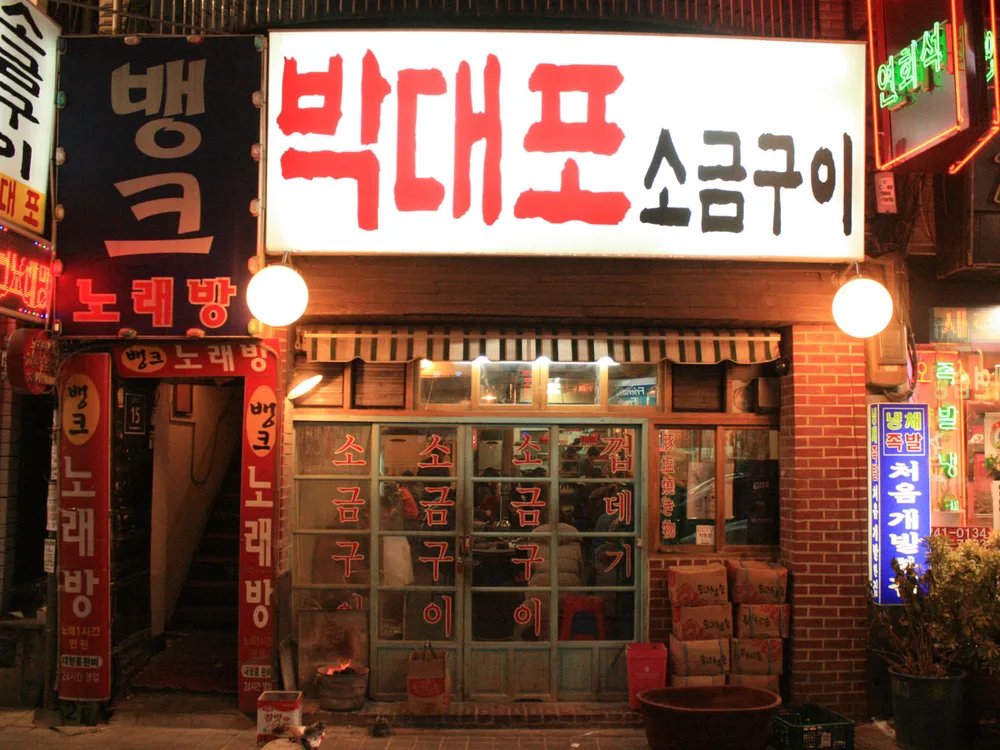
This is the one that feels wrong to a lot of visitors. Korean servers do not circle the room asking how everything is. They leave you alone until you signal. Two ways to do it:
- The call button. Many tables have a little 호출벨 (call bell) — a button on the table edge or wall that rings a chime and lights up your table number at the counter. Press it once.
- Call out. No button? Say “여기요” (yeogiyo, “over here”) or “저기요” (jeogiyo, “excuse me”) clearly across the room. It is completely normal and not considered rude — everyone does it, and a slightly raised voice is expected in a busy room.
Hovering by the counter trying to make eye contact will get you nowhere. Ring or call.
Banchan refills are free
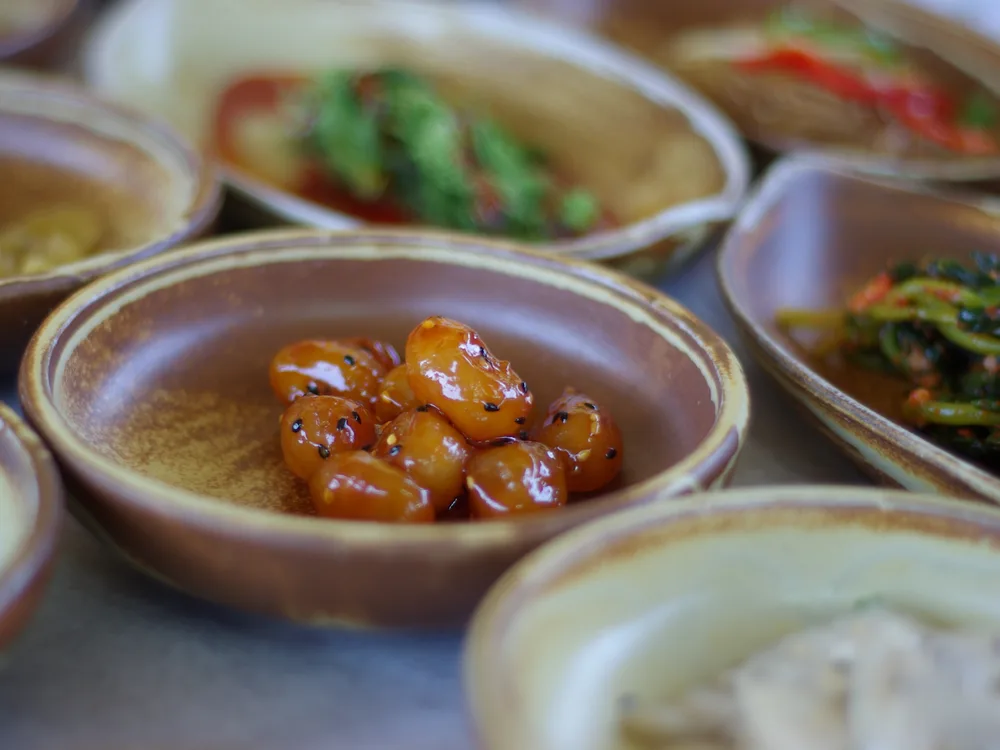
If you finish the kimchi or the bean sprouts, you can ask for a refill at no charge. Hold up the empty dish and say “반찬 더 주세요” (banchan deo juseyo, “more side dishes please”), or name the one you want — “김치 좀 더 주세요.” At some places there’s a self-serve banchan counter where you help yourself.
The limit: a few premium items aren’t refillable — a whole grilled fish, steamed egg, a portion of raw crab. If in doubt, the refillable ones are the everyday vegetables and kimchi. Don’t over-order refills you won’t finish; leaving piles of wasted banchan is bad form.
Ordering: the 인분 and the rice
Two quirks catch people out:
- 인분 (inbun) = “portions per person.” Grilled meat and many stews are sold by the 인분, often with a 2-인분 minimum — you can’t order one portion of samgyeopsal for a solo diner at some places. “삼겹살 이 인분 주세요” = “two portions of pork belly, please.”
- Rice usually costs extra. A bowl of steamed rice — 공깃밥 (gonggitbap) — is typically around ₩1,000–2,000 and ordered separately. Stews and grills don’t automatically come with it.
How you actually order varies: a tablet on the table, a paper slip you tick and hand over, or just calling it out. If your Korean is thin, point at the menu or at what the next table is having — servers are used to it. A few more words are in Essential Korean Phrases for Travelers.
Shared pots, shared grill
Lots of Korean food is communal by design: one bubbling pot of jjigae in the middle of the table, one tray of meat on the grill, and everyone eats straight from it with their own spoon and chopsticks. That’s not a faux pas — it’s the format. The etiquette around it (whose job the grill is, the two-handed pour, not stabbing your chopsticks upright) is its own thing: see Korean table manners.
At a barbecue place the staff often cut and tend the meat for you with scissors and tongs, then tell you when it’s ready. If you’re new to it, Korean BBQ for beginners walks through a full round.
Paying: at the counter, no tipping
When you’re done, don’t wait for the check. Take the paper slip from your table (if there is one) and carry it to the cashier counter by the front door. Pay there — card is fine almost everywhere, and foreign cards are widely accepted.
- One person usually pays for the whole table. Splitting the bill item by item is uncommon among Koreans; friends take turns treating instead. If you do want to split, paying by counting heads (n분의 1, “one-nth each”) is understood, just do it at the counter.
- There is no tipping in Korea. Not at restaurants, not in taxis, not for hotel staff. The price on the menu is the price. Leaving coins on the table will often get them chased down the street back to you. A rare high-end or hotel restaurant adds a 10% service charge to the bill itself — that’s the only version of a tip you’ll see.
- By the register there are usually toothpicks and mints, and sometimes a free yogurt drink or a coffee on the way out. Help yourself.
If the seating is on the floor
Some restaurants — especially traditional ones — have raised platforms where you sit on the floor at low tables. There will be a step and a shelf of shoe cubbies: take your shoes off before you step up. Sit cross-legged or with your legs to the side on the cushions; try not to point the soles of your feet at anyone. Full background on the shoes-off habit is in why Koreans take their shoes off indoors.
What to say
| Korean | Romanization | Use it to |
|---|---|---|
| 여기요 / 저기요 | yeogiyo / jeogiyo | call the server over |
| 물 좀 주세요 | mul jom juseyo | ask for water |
| 반찬 더 주세요 | banchan deo juseyo | ask for a banchan refill |
| 이거 주세요 | igeo juseyo | “this one, please” (while pointing) |
| 계산할게요 | gyesan halgeyo | “I’ll pay now” (at the counter) |
| 포장돼요? | pojang dwaeyo? | “can I get this to go?” |
| 화장실 어디예요? | hwajangsil eodiyeyo? | “where’s the toilet?” |
The short version
- Banchan is free and refillable — ask with “반찬 더 주세요.” Water and cutlery are self-serve.
- No one will come to you. Press the table call bell or say “여기요.” It’s normal.
- Meat and some stews are sold by the 인분, often a 2-portion minimum. Rice (공깃밥) costs extra.
- Pay at the front counter, not the table. One person usually covers everyone.
- Never tip. The menu price is the whole price.
- Floor seating means shoes off at the step.
Related reading
The manners side of the table — chopsticks, pouring, the shared pot — is in Korean table manners. For the two big meal formats, see Korean BBQ for beginners and, for the cheaper end, the Korean street food guide. And the phrases above all live in Essential Korean Phrases for Travelers.
Sources
- Banchan — Wikipedia (accessed 2026-09-08)
- Korean cuisine — Wikipedia (accessed 2026-09-08)
- Tipping — South Korea — Wikipedia (accessed 2026-09-08)