Korean BBQ for Beginners: How the Meal Actually Works
You cook it yourself at the table, the sides are free and endless, and there's a rhythm to it. What to order, how to build a ssam wrap, the grill etiquette, and what to say.
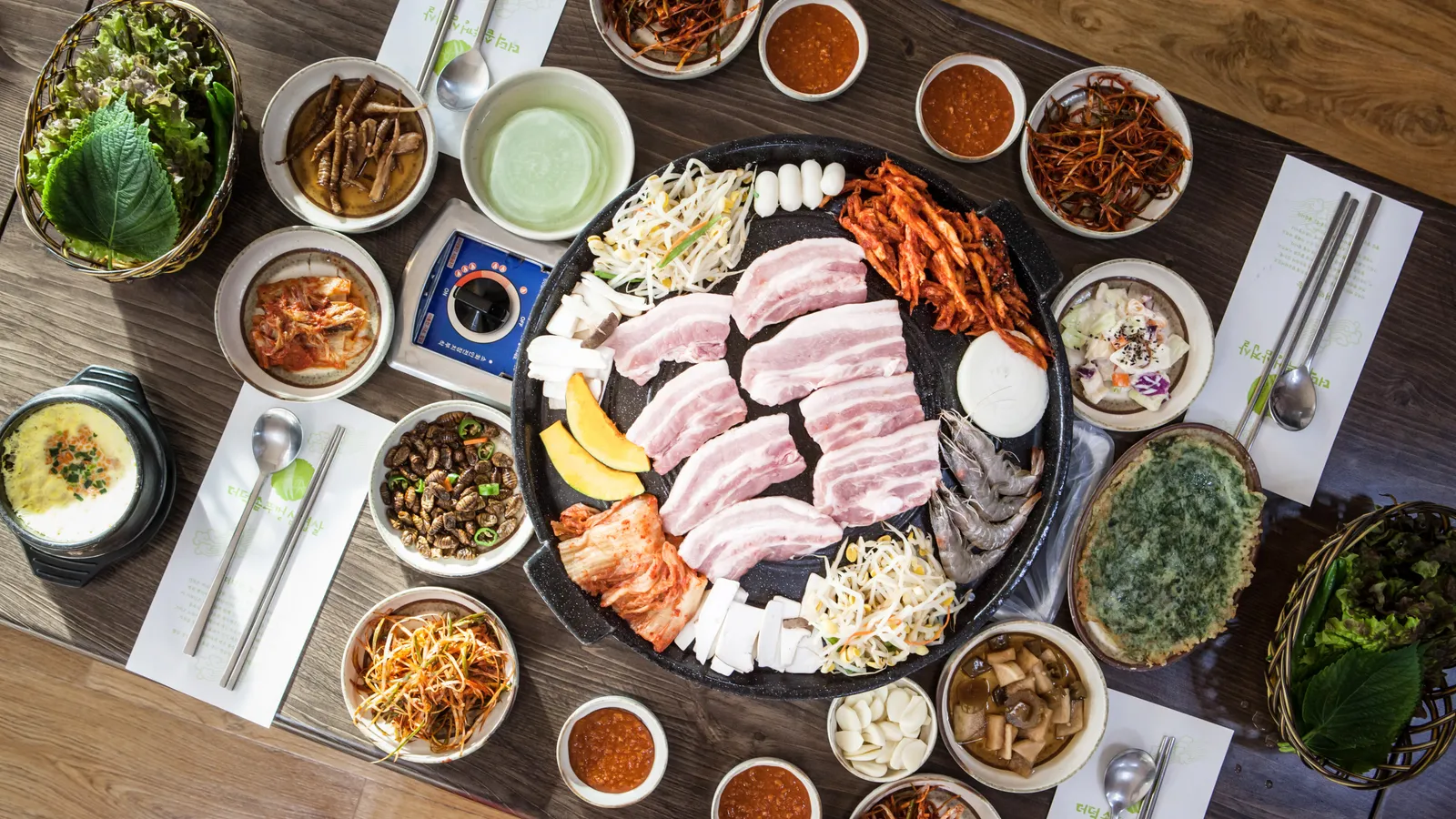
Korean barbecue — gogi-gui, “meat grilling” — is a meal you assemble yourself. Raw meat comes to the table, you cook it on a grill built into the middle of it, and around that grill is a spread of free side dishes you keep going back to. It’s social, a little hands-on, and once you’ve seen the rhythm once it’s easy.
What to order
You order meat by the portion (인분, “in-bun”, roughly one serving), and most places want a two-portion minimum to fire up your grill. Start with pork; it’s the everyday choice and the cheapest.
| Cut | Korean | What it is |
|---|---|---|
| Pork belly | 삼겹살 (samgyeopsal) | The default. Fatty, unmarinated, sold in thick strips. Start here. |
| Pork collar | 목살 (moksal) | Leaner than belly, from the shoulder. A good second plate. |
| Marinated ribs | 갈비 (galbi) | Beef or pork rib meat in a sweet soy marinade. Rich, a bit special-occasion. |
| Thin brisket | 차돌박이 (chadolbaegi) | Paper-thin beef; cooks in seconds, eaten fast. |
| Pork jowl | 항정살 (hangjeongsal) | A chewy, marbled cut people order once they know what they like. |
Plain cuts are 생 (saeng); marinated ones are 양념 (yangnyeom). If you only order one thing, order 2인분 삼겹살 and go from there.
How the meal works
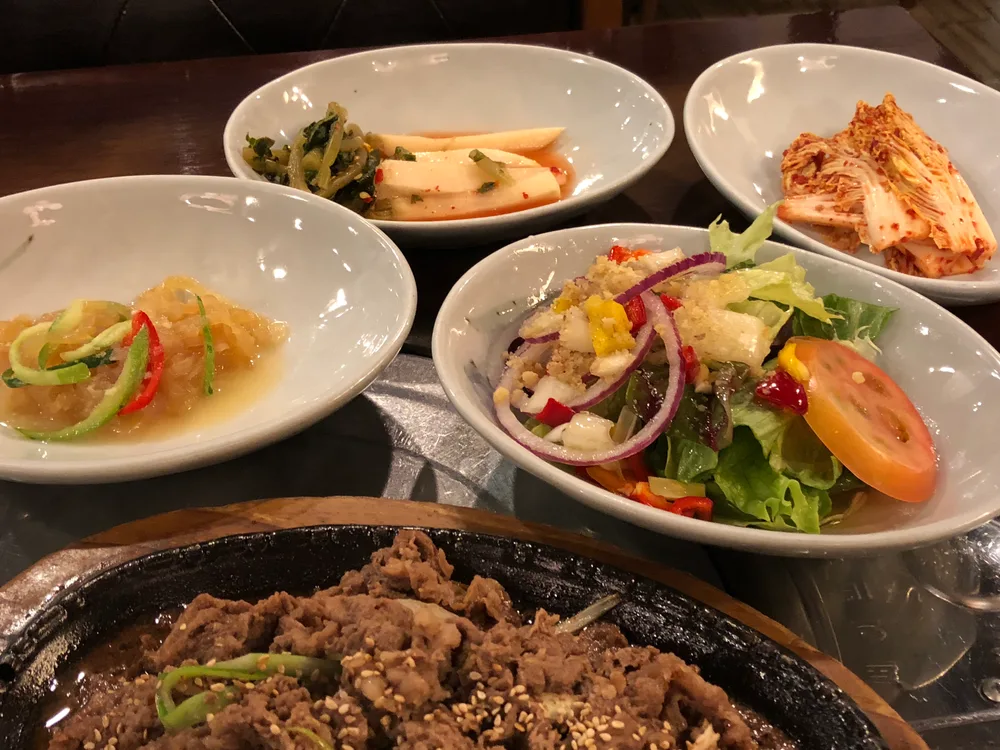
- The sides come free. A basket of lettuce and perilla leaves, a bowl of ssamjang (a thick dipping paste), a dish of salt and sesame oil, sliced raw garlic and green chilli, and a rotating set of banchan — kimchi, pickled radish, seasoned bean sprouts, sometimes a savoury steamed egg or a small soup. All of it is refillable at no charge; just ask.
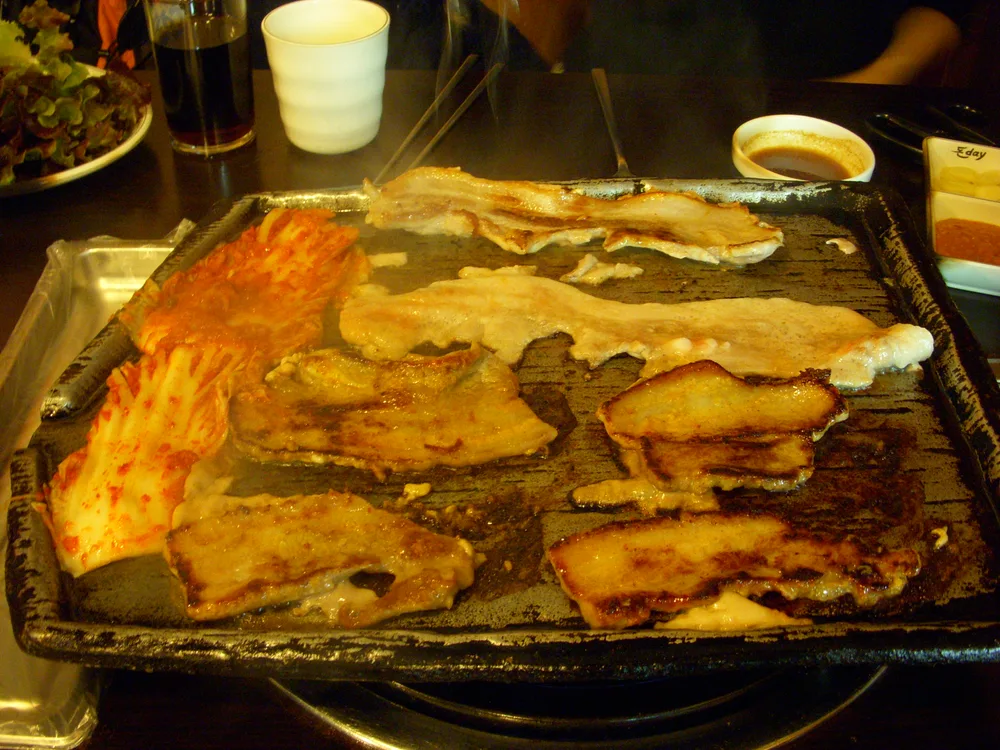
- Someone tends the grill. At many places the staff will start it, flip the meat and cut it with scissors for you. Where they don’t, that job usually falls to the youngest or least senior person at the table. Don’t pile the whole plate on at once — cook in batches.
- Grill the sides too. Push the kimchi, the garlic, and sometimes onion or mushroom onto the edge of the plate to cook alongside the meat.
- Ask for a fresh plate when the surface goes black and bitter: 불판 갈아 주세요 (“please change the grill plate”).
Build a ssam
The classic way to eat it is a ssam — a hand-built lettuce wrap. There’s no wrong version, but this is the order most people use:
A little etiquette
None of it is strict, but it’s noticed:
- The junior person at the table tends the grill and keeps an eye on everyone’s glass. If that’s not you, offer anyway.
- Meat is shared from the plate; take from your side, don’t dig across it.
- Soju and beer go with it by default — see Korean table manners for the pouring customs.
- Finish with 된장찌개 (soybean-paste stew) or cold 냉면 noodles, both common closers on the menu.
What to say
- 2인분 주세요 — two portions, please
- 삼겹살이요 — pork belly (adding -이요 / -요 to the name is enough to order it)
- 상추 더 주세요 — more lettuce, please (swap in any side dish)
- 불판 갈아 주세요 — please change the grill plate
- 여기요 — to call staff over
More of these in Essential Korean Phrases for Travelers.
Rough cost
At a normal sit-down place, budget somewhere around ₩12,000–20,000 per person for the meat, plus drinks — more for beef, less if you stick to pork. All-you-can-eat places (무한리필) run cheaper per head with lower-grade cuts and a time limit; they’re a fine way to eat a lot of samgyeopsal on a budget. Prices move, so check the menu.
The short version
- Order pork by the portion, 2인분 minimum; 삼겹살 is the safe first choice.
- Lettuce, ssamjang, garlic, and all the banchan are free and refillable.
- Cook in batches; grill the kimchi and garlic too; ask for a new plate when it chars.
- Ssam: leaf → rice → meat → ssamjang + garlic → fold → one bite.
- Junior person works the grill and pours; finish with jjigae or naengmyeon.
Related reading
The seniority and drinking customs around the table are in Korean table manners; the phrases are in Essential Korean Phrases; and for the opposite end of the budget, the convenience-store food guide.
Sources
- Korean barbecue — Wikipedia (accessed 2026-08-29)
- Samgyeopsal — Wikipedia (accessed 2026-08-29)
- Ssam — Wikipedia (accessed 2026-08-29)