Why Do Koreans Take Off Their Shoes Indoors?
In Korea shoes come off at the door — homes, hanok stays, temples, floor-seating restaurants. The reason is the floor itself: you sit and sleep on it, and it's heated from underneath.
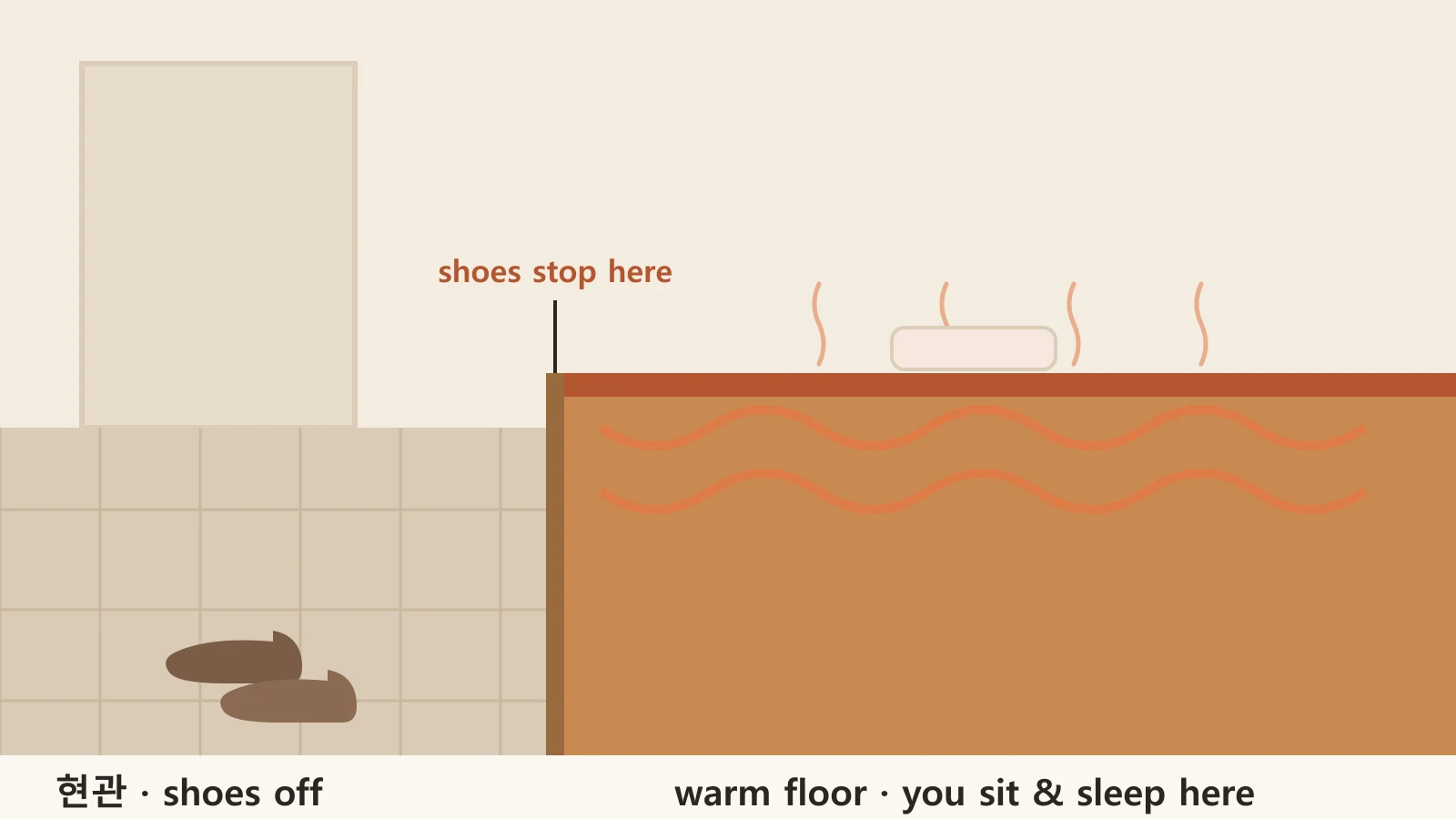
Walk into a Korean home with your shoes on and you’ll be about one step past the threshold before someone’s eyes flick down to your feet. It isn’t precious or fussy — shoes at the door is one of the most fixed rules in Korean daily life, and the reason is simple once you see it: the floor is the furniture.
The floor is where you live
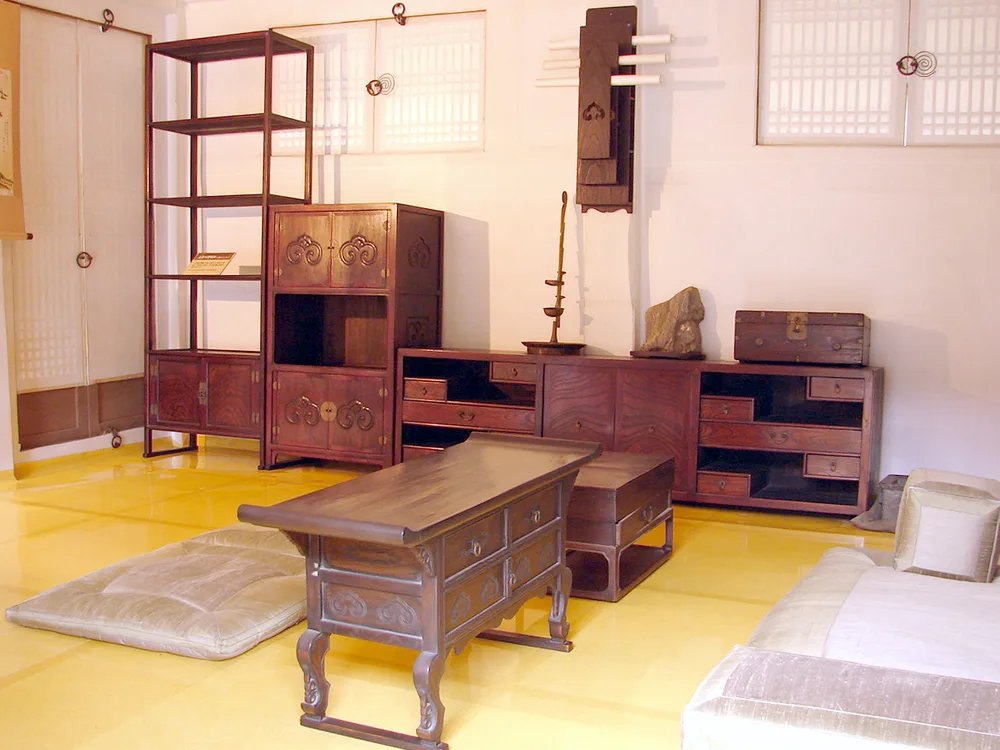
A traditional Korean room has no bed and no dining chairs. You sit on a cushion at a low table, you roll out a mattress (yo) to sleep and put it away in the morning, and kids do their homework flat on their stomachs. The floor isn’t just walked on — it’s the sofa, the bed, and the dinner table.
So it has to be genuinely clean, in a socks-on-it, face-near-it way. Outdoor shoes carry the street inside, and the street does not belong on something you eat and sleep on. Hence the hard line at the entrance.
…and it’s warm from underneath
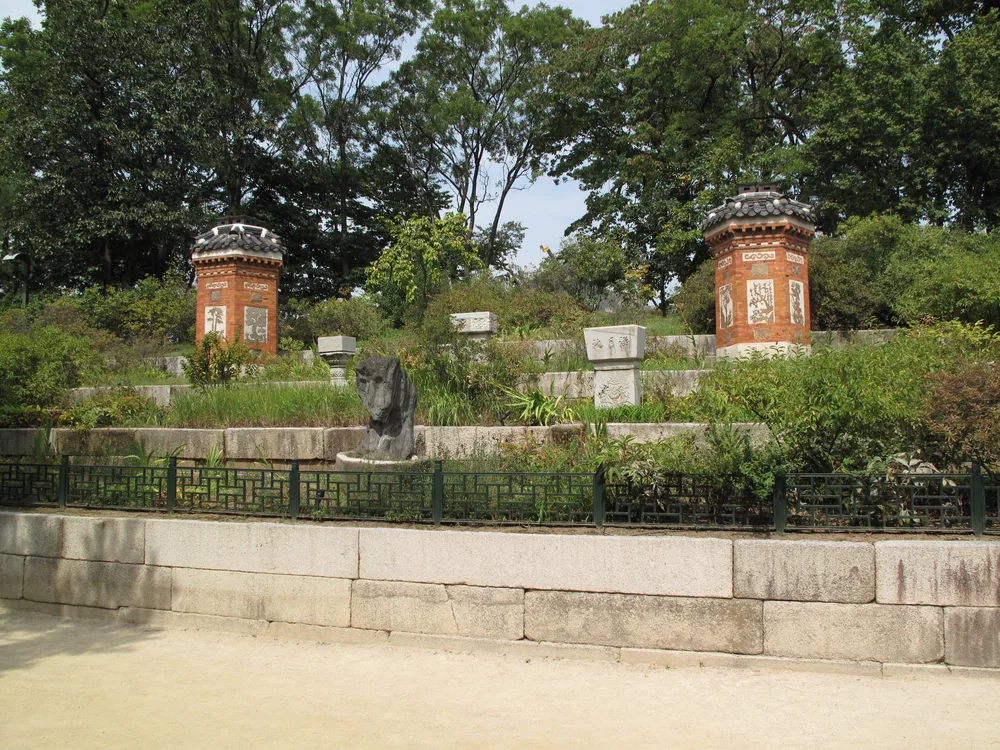
The other half of the reason is ondol (온돌), underfloor heating that Korea has used for centuries. Historically a fire at one end of the house — often the cooking fire — sent hot smoke through stone flues built under the floor and out a chimney at the far end, warming the whole slab. Modern homes do the same job with hot-water pipes in the screed, but the result is unchanged: the floor is the warmest surface in the house.
A warm floor is a place you want to sit and lie down. That’s the whole domestic setup — low furniture, cushions, the family gathered on the heated floor in winter — and shoes have no part in it.
Where the rule applies
- Homes — always
- Hanok stays, guesthouses, temple stays
- Floor-seating restaurants (look for a raised platform + a shoe shelf)
- Temple worship halls
- Some clinics, study rooms, and clothing-shop fitting rooms
- Offices and shops
- Cafes
- Most modern, table-and-chair restaurants
- Hotels (Western-style rooms)
The tell is almost always visible from the doorway — a raised threshold (the hyeon-gwan, 현관, usually a step down from the rest of the home), a shoe cabinet, cubbies, or a little pile of everyone else’s shoes.
What visitors should know
- Wear shoes you can slip off. Laces mean kneeling in the doorway every time.
- Check your socks before you go out. They’re about to be on display; pack a spare if there’s a hole.
- Never step onto the raised floor in shoes — not even one foot, not even “just to grab something.” This is the move that actually bothers people.
- Indoor slippers are often set out, and the bathroom usually has its own separate pair by that door. Swap into those, and back out again when you leave the bathroom.
- Turn your shoes to face the door as you take them off. It’s a small, automatic courtesy — and it makes leaving easier.
- At a temple, socks are expected inside the halls; bare feet read as underdressed.
The one-line version
The floor is the bed, the couch, and the table, and it’s heated from below — so it stays as clean as a bed. Shoes live at the door. Once you’ve felt a warm ondol floor on a cold night, the rule stops feeling like a rule.
Related reading
Staying in a hanok? 5 must-visit places in Seoul includes Bukchon Hanok Village, and there’s more everyday context in the Culture section. For the casual tone you’ll hear once you’re settled in on the floor, see what ㅋㅋ means in Korean.
Sources
- Ondol (Korean underfloor heating) — Wikipedia (accessed 2026-08-29)
- Hanok — traditional Korean house — Wikipedia (accessed 2026-08-29)
- Official Korea Tourism site (VisitKorea) — Korea Tourism Organization (accessed 2026-08-29)