Korean Street Food: A First-Timer's Guide
What to eat at a Korean market stall or night cart — tteokbokki, eomuk, sundae, twigim, hotteok, corn dogs — plus where to find it, how paying works, and which picks aren't spicy or meat.
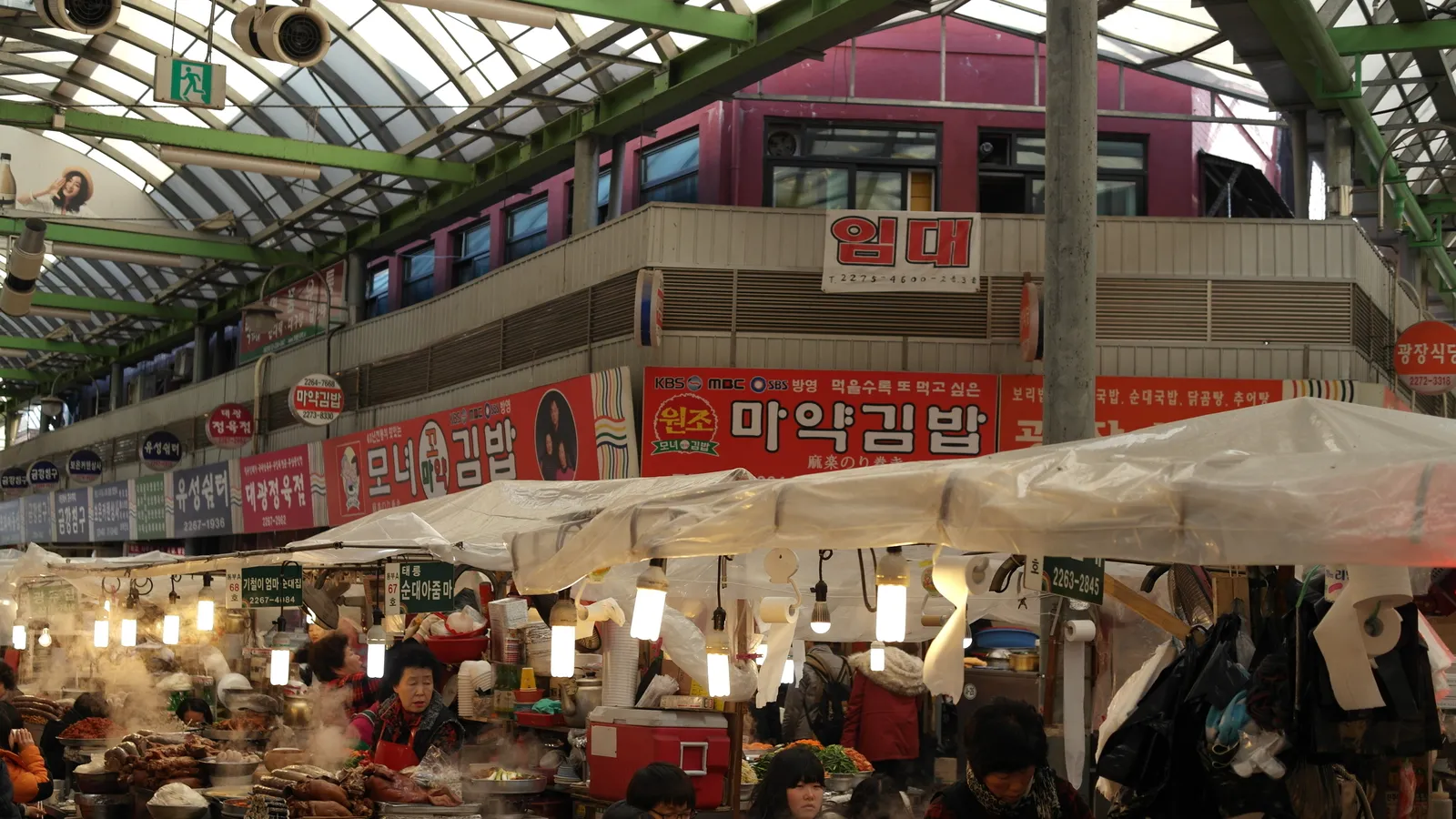
Korean street food is its own small world — bunsik (분식), the cheap snack-food category, sold from market stalls by day and tented pojangmacha carts at night. It’s fast, mostly cash, eaten standing at the counter or walking, and it clusters in a few predictable places: covered markets, shopping streets, and the blocks around any university.
Where to go
- Gwangjang Market (Seoul) — the classic. A whole covered alley of stalls doing bindaetteok, mayak gimbap, sundae and raw beef, with stools to sit on. Featured in 5 must-visit places in Seoul.
- Myeongdong (Seoul) — evening carts aimed squarely at tourists: corn dogs, tornado potato, grilled cheese lobster. Fun, pricier, less “local.”
- Namdaemun Market (Seoul) — older, workaday, strong on hotteok and knife-cut noodles.
- BIFF Square / Bupyeong Kkangtong Market (Busan) — Busan’s street-food core, home of seed hotteok.
- Anywhere at night — a pojangmacha with an orange tent and plastic stools will do tteokbokki, eomuk and soju until late.
What to eat
The stall staples
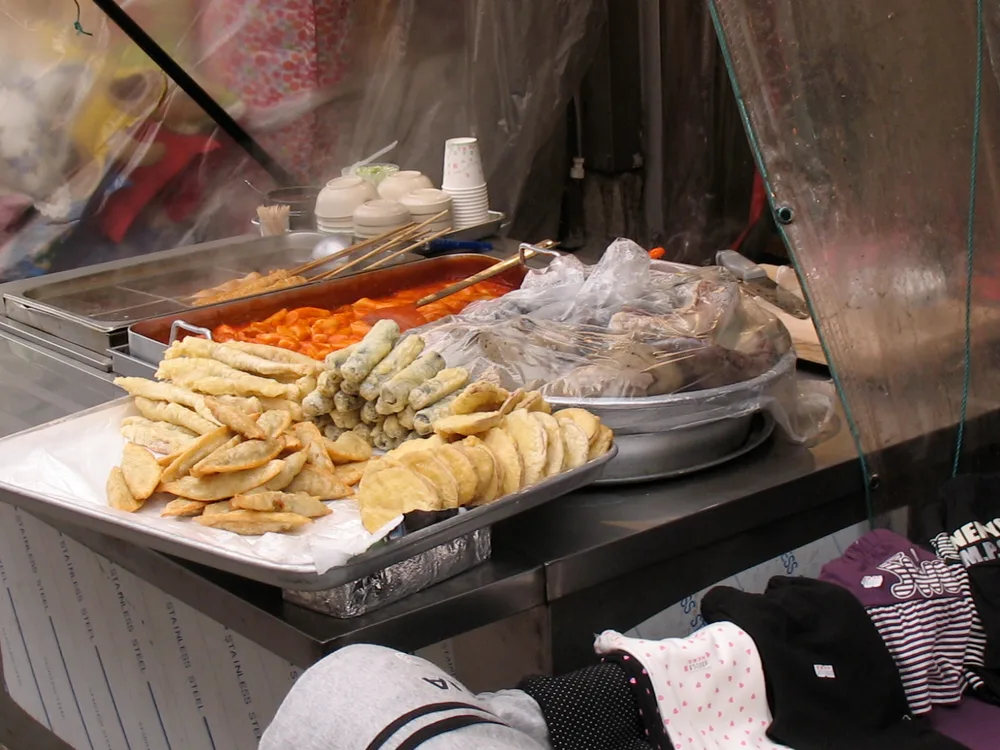
- 떡볶이 (tteokbokki) — chewy rice-cake fingers in a sweet-and-spicy gochujang sauce, usually with fish cake and boiled egg mixed in. The default Korean street snack. Rosé and broth (gukmul) versions exist.
- 어묵 / 오뎅 (eomuk) — fish-cake sheets folded onto skewers, sitting in a hot anchovy broth. Take a skewer, and help yourself to the broth in a paper cup — that part is free.
- 순대 (sundae) — steamed blood sausage stuffed with glass noodles, sliced and served with salt or with tteokbokki sauce; often comes with bits of liver. Better than it sounds; worth knowing what it is first.
- 튀김 (twigim) — battered and deep-fried squid, sweet potato, pepper, dumplings, seaweed rolls. Bought by the piece and dipped in the tteokbokki sauce.
- 김밥 (gimbap) — seaweed-rice rolls. At Gwangjang, look for mayak gimbap (“narcotic” gimbap) — finger-sized rolls you dip in mustard-soy.
Griddled and sweet
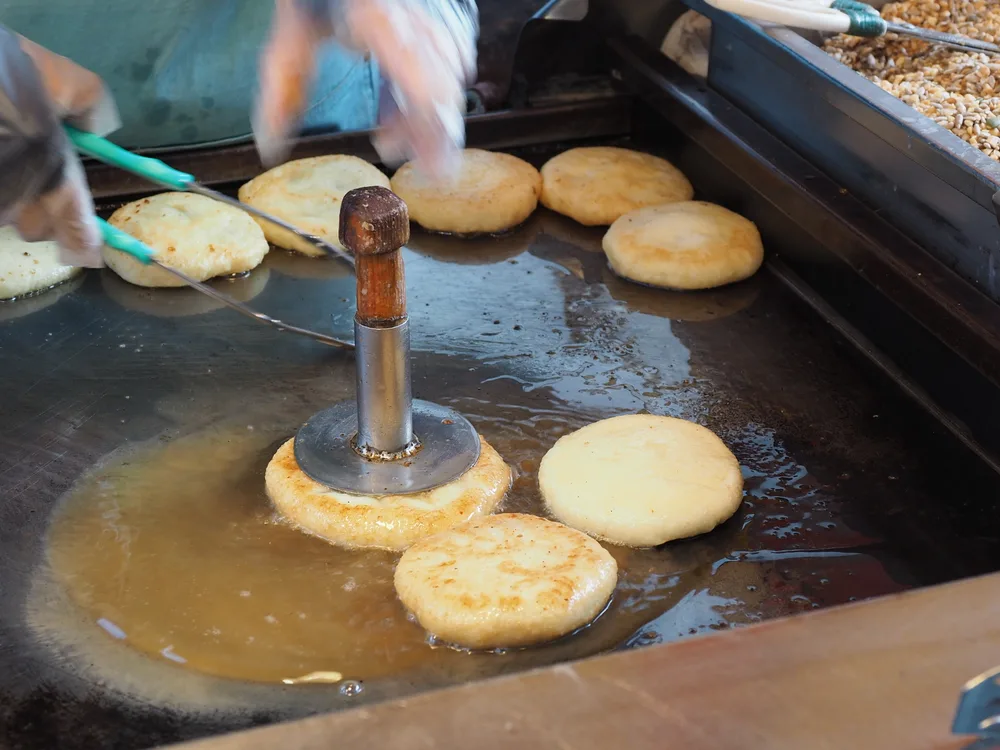
- 호떡 (hotteok) — a yeasted pancake pressed flat and fried, filled with melted brown sugar, cinnamon and crushed nuts. Busan’s 씨앗호떡 (seed hotteok) stuffs the split pancake with sunflower and pumpkin seeds.
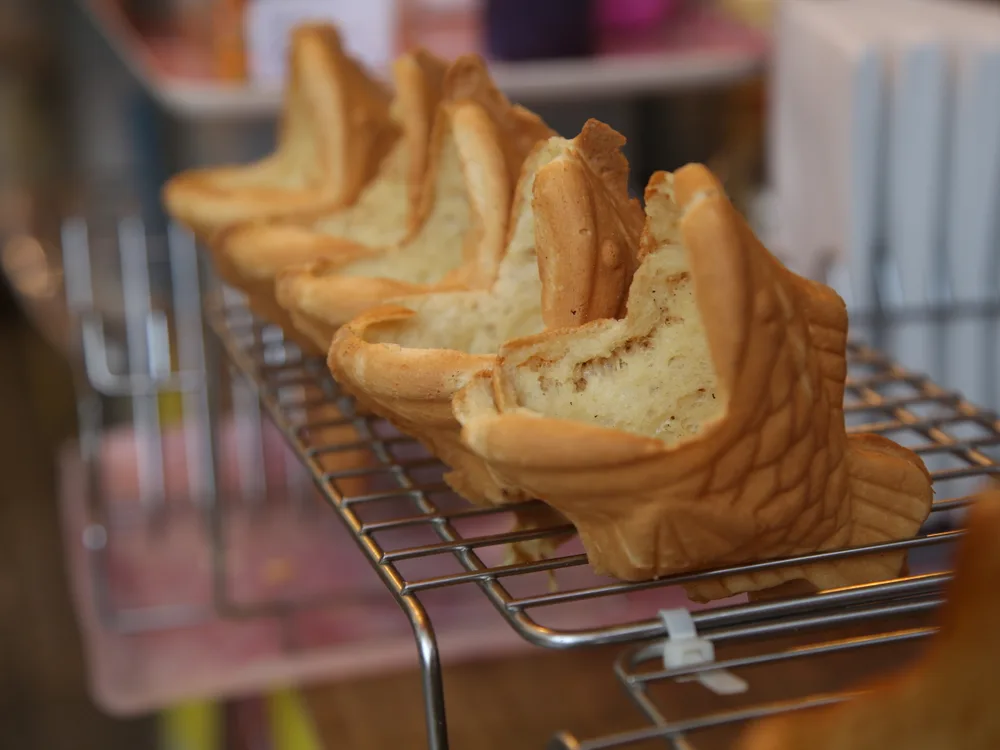
- 붕어빵 (bungeoppang) — a fish-shaped waffle-cake with sweet red-bean paste (or custard). A winter thing; the first cart appearing is basically a seasonal marker.
- 계란빵 (gyeran-ppang) — a small oval bread with a whole egg baked into it. Savoury, filling, also cold-weather.
On a stick
- 닭꼬치 (dak-kkochi) — grilled chicken skewers with a brushed-on sweet or spicy glaze.
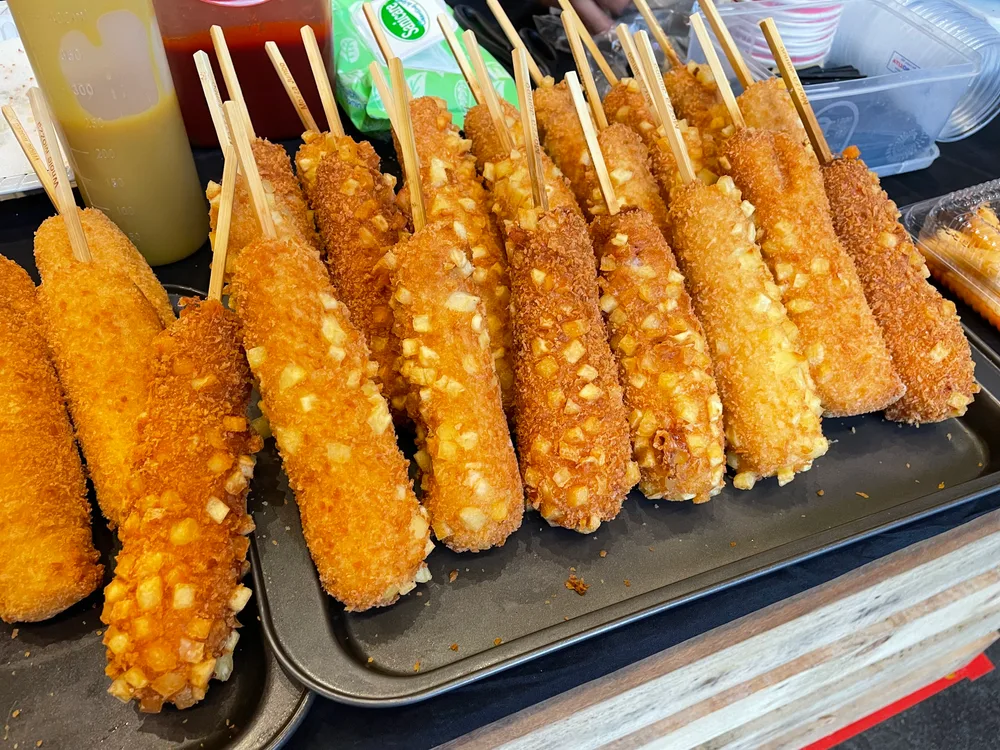
- 핫도그 / 감자핫도그 (Korean corn dog) — a sausage or a mozzarella stick (or both), battered, sometimes crusted in cubed potato, deep-fried, and rolled in sugar or drizzled with sauce.
- 회오리감자 (tornado potato) — a whole potato spiral-cut onto a skewer and fried; more photogenic than delicious.
Regional heroes
- 닭강정 — bite-sized double-fried chicken in a sticky sweet-spicy glaze; Sokcho’s Jungang Market and Gwangjang both have famous versions.
- 소떡소떡 — alternating sausage and rice-cake on a skewer with a glossy sauce; a highway rest-stop icon that’s crept into the cities.
How a stall works
- Cash is safest, though many carts now take card, Kakao Pay or Zero Pay — look for the stickers.
- Order by the piece or the portion (개 / 인분). Point; say 이거 하나 주세요 (“one of these, please”).
- Eat there or take it away. 여기서 먹을게요 to eat at the cart; 포장이요 for a bag.
- The eomuk broth is free and self-serve — paper cups are stacked by the pot.
- Napkins and toothpicks live on the cart. A stall with a queue is a stall with fast turnover, which is the freshness you want.
Spice, and what isn’t meat
Tteokbokki, dak-kkochi glaze and some twigim dips run genuinely hot — much of it is pre-made, so “not spicy” isn’t always an option, but it never hurts to ask (안 매워요? — “is it not spicy?”).
The reliably meat-free picks: hotteok, bungeoppang, gyeran-ppang, vegetable or sweet-potato twigim, and plain gimbap (check — some have ham or fish cake). Sundae is blood sausage, and eomuk broth is anchovy-based. Halal options are rare outside a few dedicated stalls in Itaewon.
What to say
- 이거 하나 주세요 — one of these, please
- 얼마예요? — how much is it?
- 포장이요 — to go
- 여기서 먹을게요 — I’ll eat here
- 안 매워요? — is it not spicy?
More of these in Essential Korean Phrases for Travelers.
The short version
- Head for a covered market (Gwangjang) or a night pojangmacha; bring cash.
- Start with tteokbokki + twigim and a free cup of eomuk broth; add hotteok if it’s cold.
- Sundae is blood sausage; mayak gimbap is the Gwangjang specialty.
- Point, say 이거 하나 주세요, eat standing up.
Related reading
For a sit-down grilled meal, Korean BBQ for Beginners; for the 24-hour budget option, the convenience-store food guide. Gwangjang Market also appears in 5 must-visit places in Seoul.
Sources
- Korean cuisine — Wikipedia (accessed 2026-08-30)
- Tteokbokki — Wikipedia (accessed 2026-08-30)
- Bunsik (Korean snack food) — Wikipedia (accessed 2026-08-30)