Korean Table Manners: What to Do at Your First Meal Out
The Korean table is shared and seniority-aware. Wait for the eldest, keep chopsticks out of the rice, pour for others with two hands — the handful of things a visitor can actually get wrong, and why.
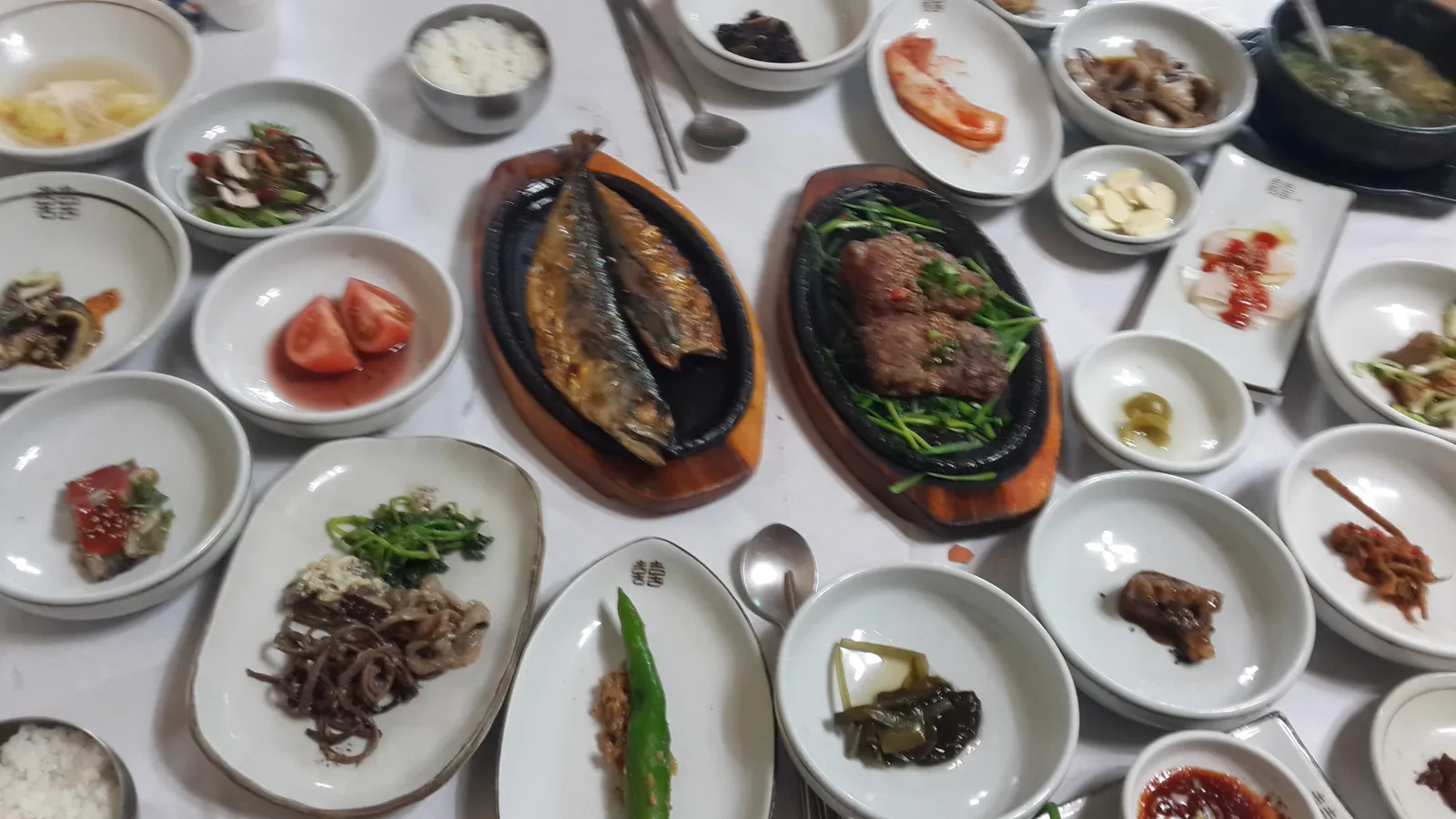
A Korean meal out is a group activity with a bit of quiet structure to it. Nobody expects a visitor to know all of it, and getting something wrong just gets you a friendly correction — the same as wearing your shoes into a home. But a few of the rules are easy to trip over without noticing, and one or two carry more weight than they look like they do.
The table is shared
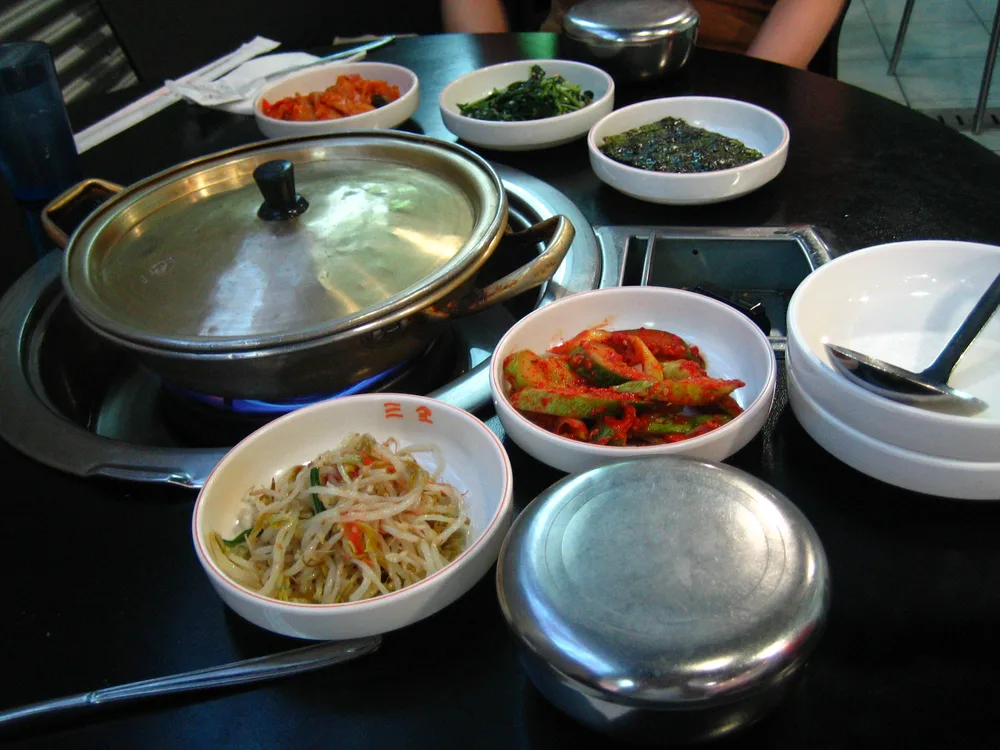
The little dishes that arrive unasked — kimchi, seasoned vegetables, fish cake, egg — are banchan, and they’re communal, unlimited, and free. Ask for a refill (리필이요 / “more of this, please”) without hesitation; that’s the system working as intended.
A jjigae (stew) or a jeongol (hotpot) in the middle of the table is also shared — often eaten straight from the pot. If there’s a serving spoon, use it; if not, taking a spoonful directly is normal among people who know each other, less so with strangers or a boss. Your rice bowl and your soup bowl are the only things that are just yours.
Wait for the eldest
The oldest person at the table lifts their spoon first, and everyone else starts after them. You pace roughly with the group, and you don’t get up from the table until the elders are done. If you can’t work out the etiquette in the moment, the safe move is simply to watch the most senior person and do what they do — when they pick up chopsticks, so do you.
This is the same seniority logic that runs through Korean speech and workplaces; the table is just where a visitor meets it first.
Spoon, chopsticks, and two real “don’ts”
Koreans use the spoon far more than their neighbours: it’s for rice and for soup, and the rice bowl stays on the table — you don’t lift it to your mouth the way you would in Japan. Chopsticks are for everything else. Try not to hold both at once.
Two things to genuinely avoid:
Standing your chopsticks upright in a bowl of rice is how rice is set out for the dead at a jesa (ancestral rite); passing food directly from your chopsticks to someone else’s mirrors the way cremated bones are moved. People will flinch. Also skip spearing food, waving chopsticks while you talk, and rummaging through a shared dish — take neatly from the top.
Pouring and drinking
If there’s soju or beer, the rule is simple: you don’t pour your own glass. You pour for the people around you, they pour for you, and you keep half an eye on whose glass is getting low.
Hold the bottle in two hands, or with your right hand while your left touches your own forearm. Receive the same way. If someone older pours for you, lift your glass off the table to meet it. And when you take that first sip in front of an elder, turn your head away from them as you drink — a small old courtesy that’s still very much alive.
Who pays
Usually one person pays for everyone — often the eldest, or whoever did the inviting. You may see people half-argue over the bill at the till; that’s a real contest to be the one who pays, not a formality. Going Dutch (더치페이) is now normal among younger friends, but the “I’ll get this, you get the next one” system is still the default. Offering to buy coffee or dessert afterwards is the easy way to take your turn.
Small stuff
- Slurping noodles is fine. Blowing your nose at the table is not — step away if you have to.
- Say 잘 먹겠습니다 (“I’ll eat well”) before you start and 잘 먹었습니다 (“I ate well”) after — even a mumbled version is appreciated.
- Don’t refuse a refill by covering your glass with your hand in a hard “no”; just leave it a little full, which signals you’re set.
The short version
- Wait for the oldest person to start; copy them if unsure.
- Banchan is shared, free, and refillable — just ask.
- Spoon for rice and soup; the rice bowl stays on the table.
- Never stand chopsticks upright in rice, never pass food chopstick-to-chopstick.
- Pour for others, not yourself; two hands; turn away to drink in front of elders.
- One person usually pays — return it next time, or grab the coffee after.
Related reading
For eating on no budget, see the convenience-store food guide; for a first street-food meal, 5 must-visit places in Seoul passes Gwangjang Market. And the door-side counterpart to all this is why Koreans take off their shoes indoors.
Sources
- Korean cuisine — Wikipedia (accessed 2026-08-29)
- Culture of South Korea — Wikipedia (accessed 2026-08-29)
- Jesa (ancestral rites) — Wikipedia (accessed 2026-08-29)