Korean Convenience Store Food: A Beginner's Guide
Korea's convenience stores are a real meal for the price of a coffee, 24/7 — dosirak lunchboxes, cup ramyeon, triangle gimbap, and the 1+1 game. What to buy, how to heat it, and how to open a samgak-gimbap without wrecking it.
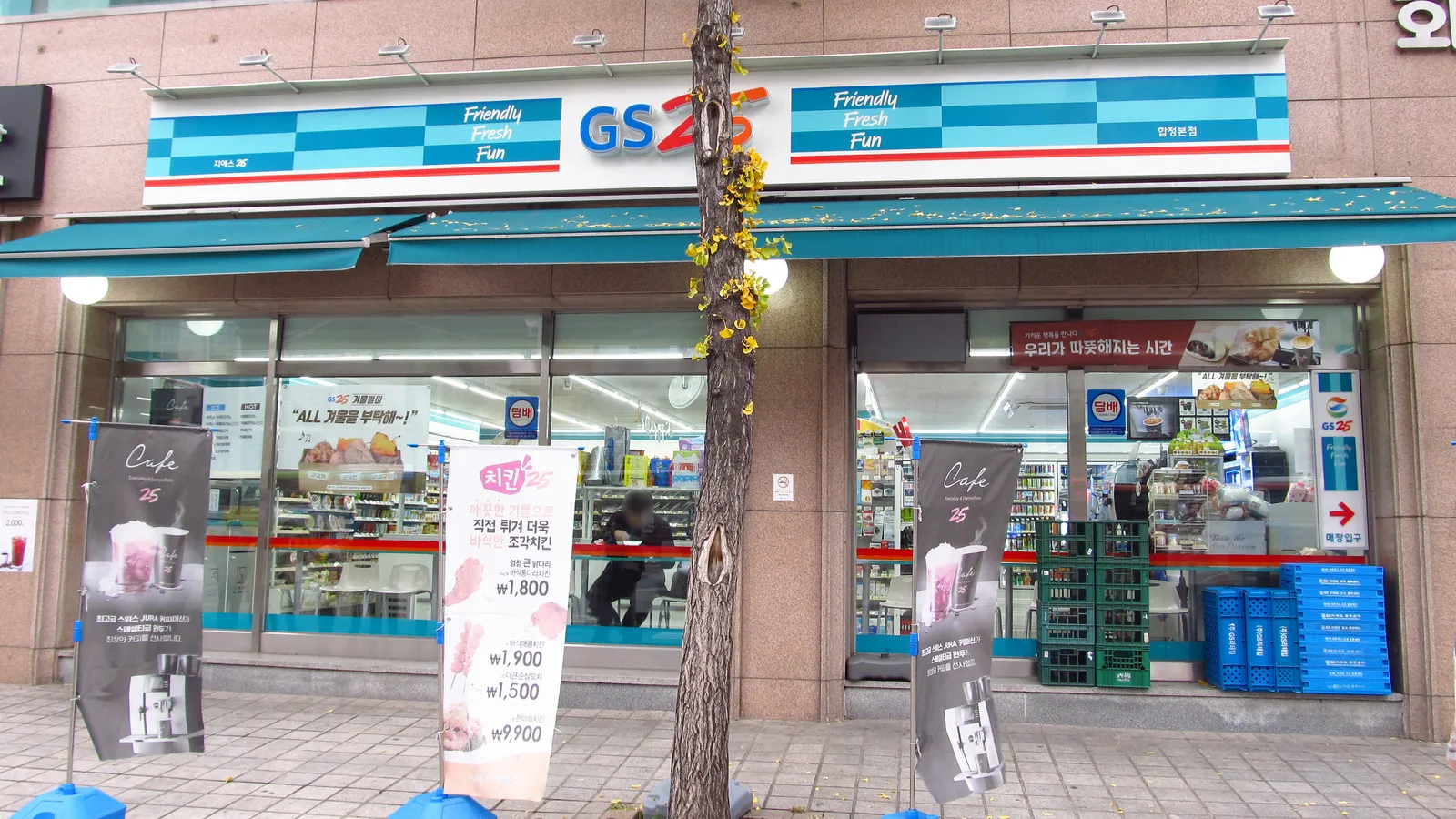
You can eat properly in Korea for about the price of a coffee, at any hour, and the place to do it is the convenience store. CU, GS25, 7-Eleven, Emart24 — they’re on nearly every block, open 24 hours, and most have a counter to sit at, a microwave, and a hot-water tap. A hot lunchbox, a cup of noodles and a drink comes to a few thousand won.
The chains are close enough to interchangeable that Koreans mostly argue about the own-brand snacks. Walk into any of them and you’ll find the same setup.
What to actually buy
Samgak-gimbap (삼각김밥) — the triangle
A palm-sized triangle of rice with a filling — tuna-mayo, bulgogi, kimchi, spicy squid — wrapped so the seaweed stays crisp until you open it. It’s the cheapest thing that counts as a small meal, usually somewhere around ₩1,000–1,500.
The wrapper is the famous part. There’s a strip of plastic film between the seaweed and the rice, and a three-step sequence printed on the back to remove it without the seaweed tearing:
Get it slightly wrong and the seaweed rips and half of it stays in the wrapper. Everyone has done it.
Dosirak (도시락) — the full lunchbox
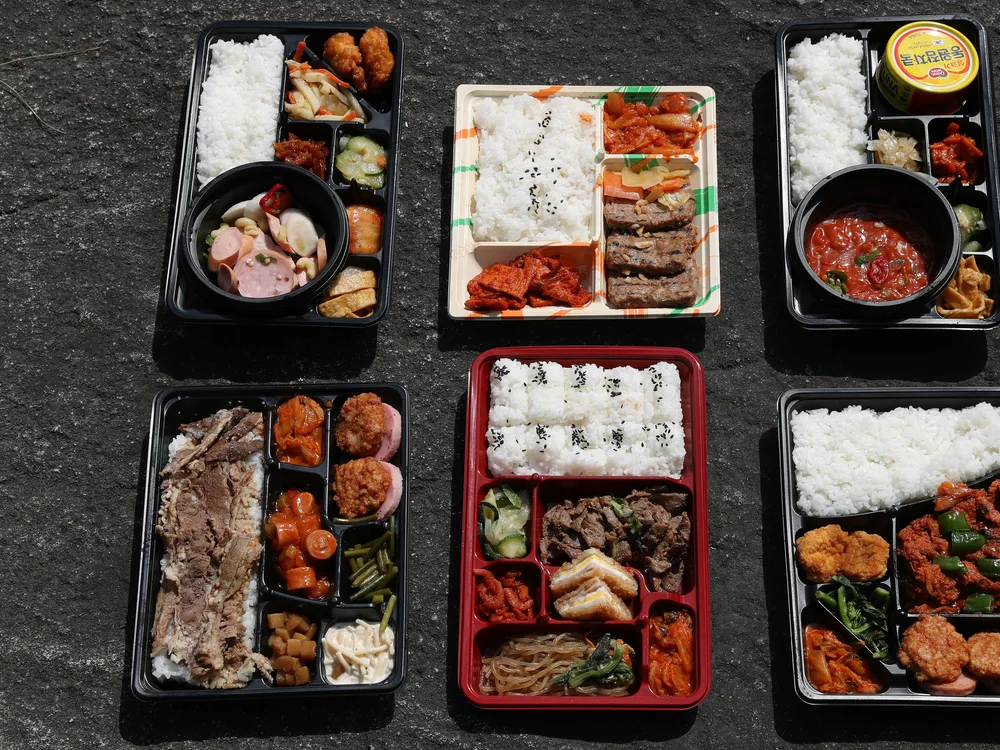
The dosirak is the actual meal: a block of rice, a main (bulgogi, fried pork cutlet, sausage, spicy chicken), and three or four banchan compartments. Still much cheaper than a restaurant. Peel the lid’s vent corner open before microwaving, hit the time on the shelf label (usually printed in seconds), and let it sit a minute before you fight the film.
Cup ramyeon (컵라면)
Pick a cup, fill it to the line at the hot-water machine, put the lid back and weight it with your chopsticks, wait three or four minutes. The store versions of Shin Ramyun, Yukgaejang, Jjapaghetti and Wangttukkeong (왕뚜껑, the big round one) are all there. A gimbap on the side is the classic pairing.
Hot stuff by the register
In colder months there’s a steamer of jjinppang (steamed buns) and a tank of eomuk (fish-cake skewers in broth) near the counter, plus hotbar — a sausage-and-fishcake stick. Point and pay.
Drinks, and the 1+1 game
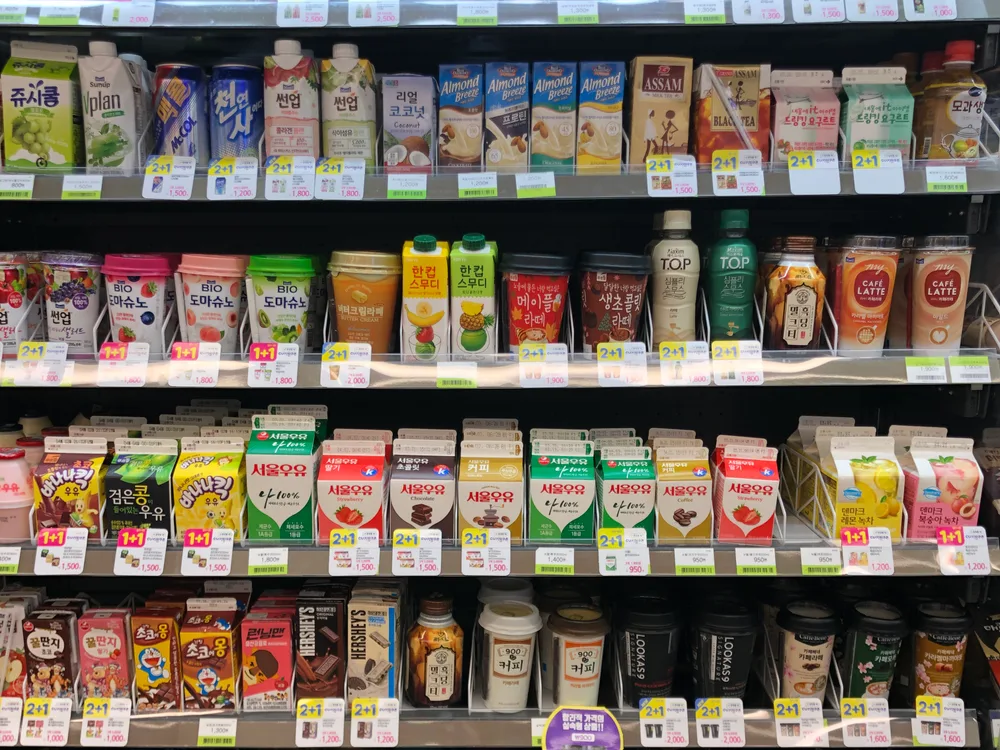
The classics: banana-flavoured milk (the little barrel-shaped bottle), sikhye (sweet rice punch), Yakult-style yogurt drinks, and every bottled coffee brand Korea makes. Watch the shelf edges for 1+1 (buy one, get one) and 2+1 (buy two, get one) stickers — they’re constant on drinks and snacks, and the free item just needs to be the same price or lower.
Paying and eating in
- Payment: most foreign cards work; a T-money transit card also works as stored value at the matching chain. Contactless is normal.
- Bags cost money. You’ll be asked; say no if you can carry it.
- Eating in: use the counter or window seats, and clear your own table — trash and recycling bins are by the door or the microwave. Staff heat nothing for you; the machines are self-service, and they’ll point if you look lost.
A full meal, assembled
A dosirak + a cup ramyeon + a banana milk is a genuinely filling lunch for roughly the cost of a plain café latte — heated, eaten at the window, done in fifteen minutes. That’s the whole appeal.
Related reading
For a sit-down first taste instead, 5 must-visit places in Seoul passes Gwangjang Market. The casual Korean you’ll text a friend over a ₩1,200 lunch is in what ㅋㅋ means in Korean, and the rest is in the Food section.
Sources
- Convenience store (overview) — Wikipedia (accessed 2026-08-29)
- Gimbap — Wikipedia (accessed 2026-08-29)
- Dosirak — Wikipedia (accessed 2026-08-29)