How to Use the Seoul Subway
Seoul's metro is huge, cheap and bilingual, and once you have a card and know the exit-number trick it's easy. Cards and fares, reading the signs, the apps, hours, and the etiquette that gets visitors stared at.
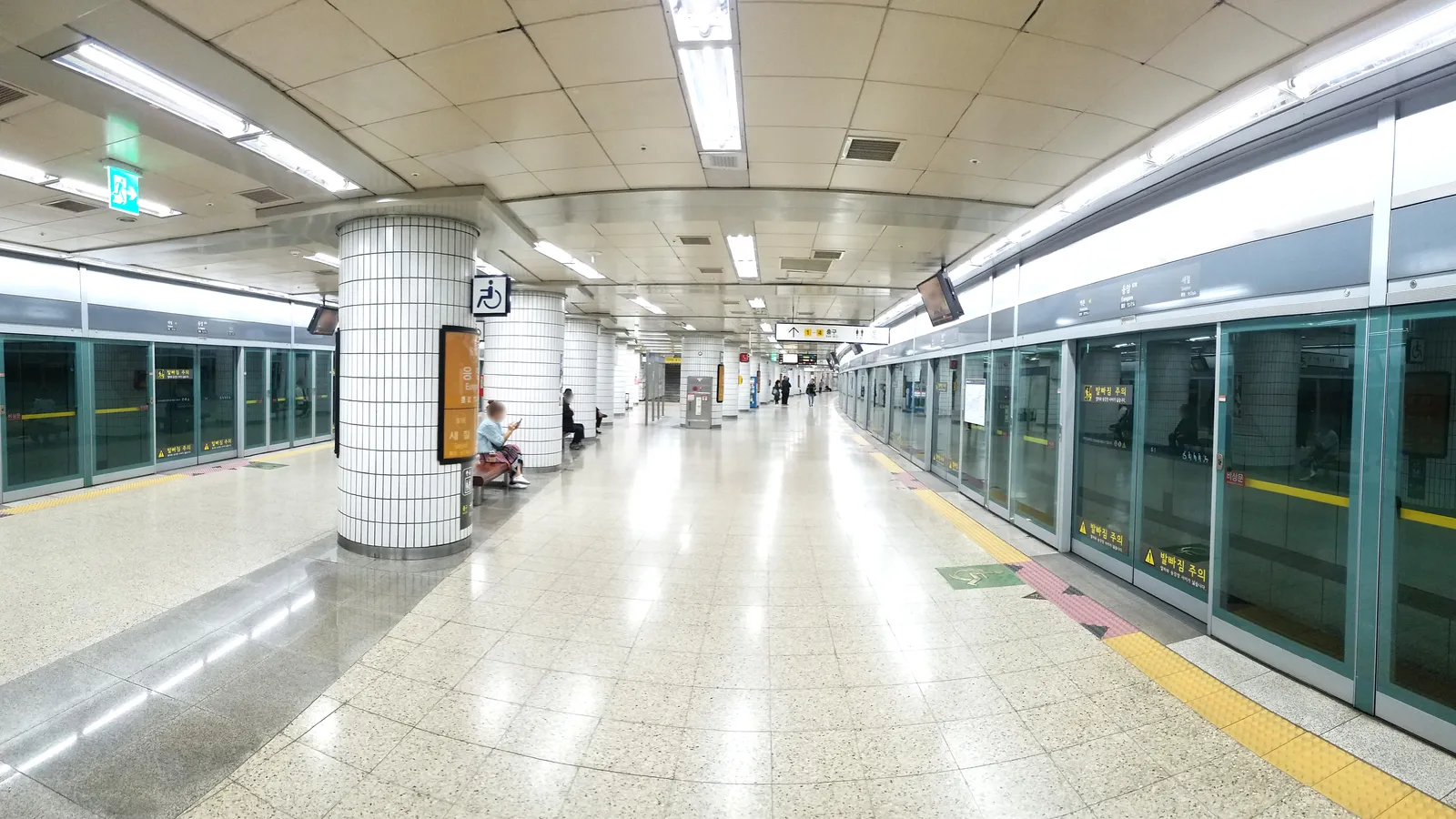
Seoul’s subway is one of the world’s largest — well over 300 stations across the core network, plus suburban lines that reach almost anywhere a visitor goes. Every sign, map and announcement is in English as well as Korean, a ride across the city costs about a coffee, and the trains are frequent and clean. The two things worth learning up front are which card to get and how exit numbers work.
The card
You tap a card on the gate to get in and again to get out. Options, cheapest effort first:
- T-money — a rechargeable stored-value card. Buy it at any convenience store (GS25, CU, 7-Eleven) or a machine in the station for about ₩3,000–4,000, then load cash onto it. It works on the subway, city buses, many taxis, and to pay at convenience stores. This is the default for most visitors.
- Climate Card (기후동행카드) — an unlimited pass for subway and bus within Seoul. There’s a short-term version for visitors (1, 2, 3, 5 or 7 days) at roughly ₩5,000 per day. Worth it if you’ll take three or more rides a day for several days; not worth it for lighter use.
- Single-journey card — a one-trip card with a ₩500 deposit you get back from a machine at the other end. Fine if you’re genuinely only riding once.
- Contactless bank card / phone — some gates now accept tap-to-pay, but coverage is patchy. Don’t rely on it; carry a T-money card.
Fares
The base fare with a card is around ₩1,400 for the first ~10 km, rising in small steps after that — a long cross-city trip is still only about ₩1,600–2,000. If you tap out and transfer to another subway line or a bus within about 30 minutes, the transfer is free or heavily discounted. Cash single-journey tickets cost a little more than card fares.
Reading the system
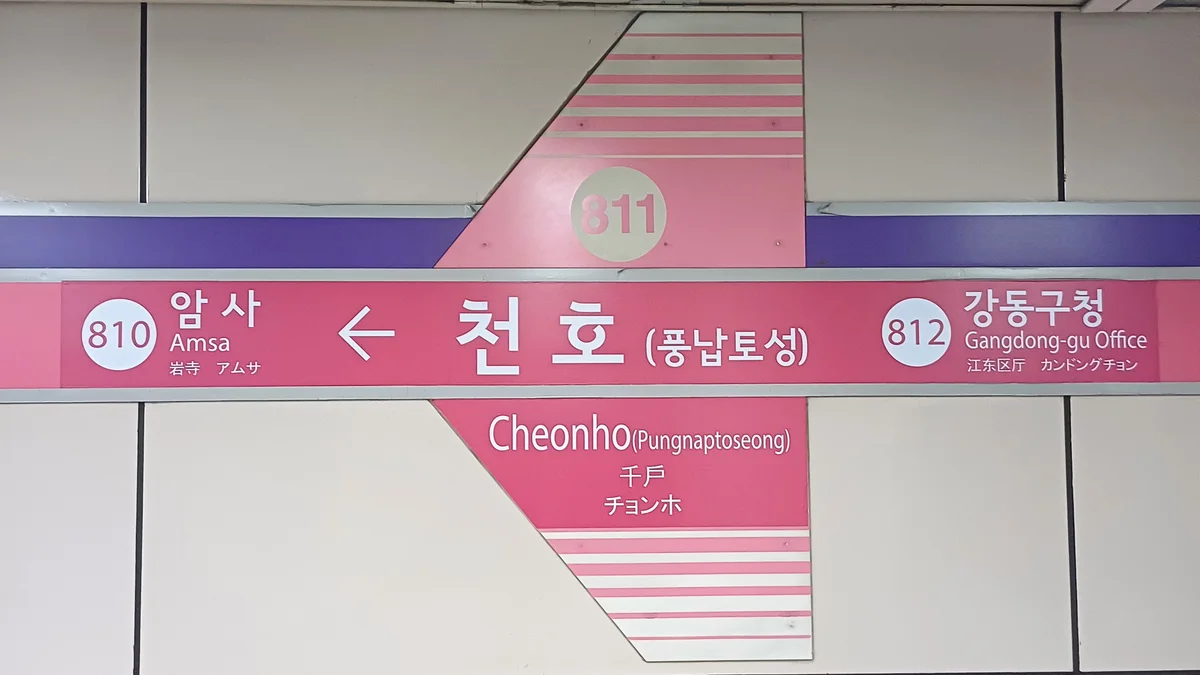
- Lines are numbered 1–9 and colour-coded; the suburban lines have names instead (Gyeongui–Jungang, Suin–Bundang, Sinbundang, AREX, and so on).
- Stations each have a three-digit code — the first digit is the line. Hongik Univ. is 239 (Line 2), Gyeongbokgung is 327 (Line 3). Announcements give both the name and the number.
- Direction is shown by the next major station each way (for example “← 잠실 / 강남 →”). Line 2 is a loop, so its platforms say 내선 (inner) and 외선 (outer) instead.
Exit numbers are the skill
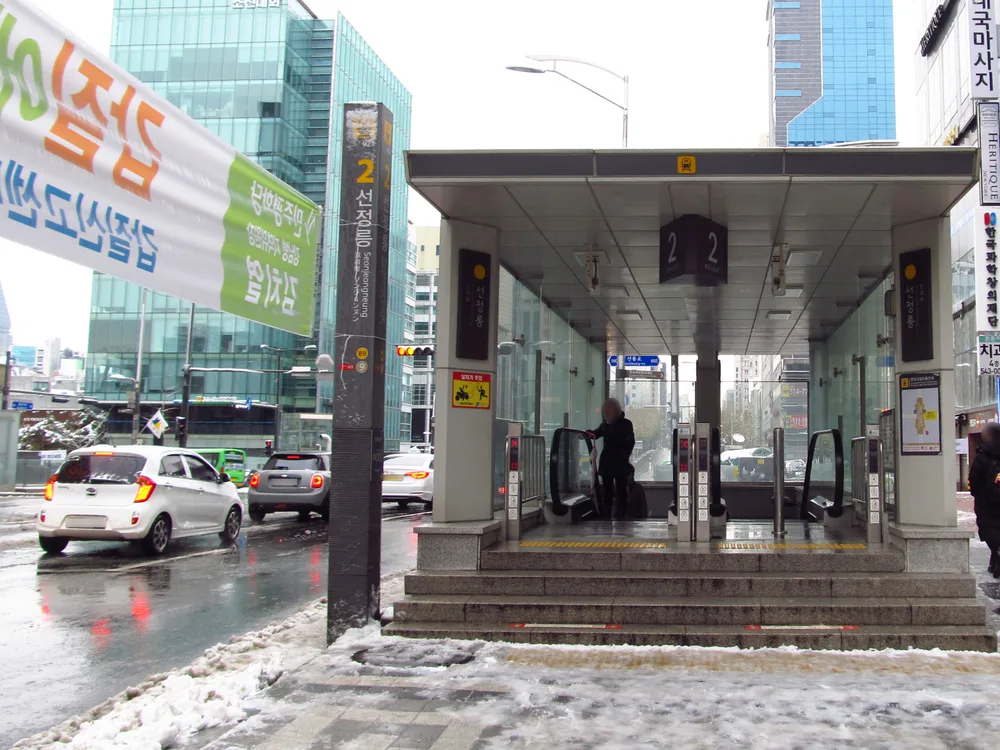
Every station has numbered exits, and every address, café and attraction in Seoul is given relative to one: “5 minutes from Exit 6.” A large interchange can have fifteen or more exits spread around a whole block, and choosing the wrong one can add a ten-minute walk, or a road you can’t cross.
The apps
Do not use Google Maps for getting around Korea — it can’t give proper walking or transit directions here. Install Naver Map or Kakao Map instead; both have an English mode and both do door-to-door subway routing, including which train car to board for the fastest transfer. A dedicated subway app (Subway Korea, Kakao Metro) is handy for first/last-train times and live arrivals.
Hours
Trains run from roughly 05:30 in the morning to around midnight, with the exact last train depending on the line and direction — from central hubs it’s usually between 23:30 and 00:30. There is no all-night service. After the subway stops, it’s a taxi or a night bus (올빼미버스, route numbers starting with N).
Etiquette
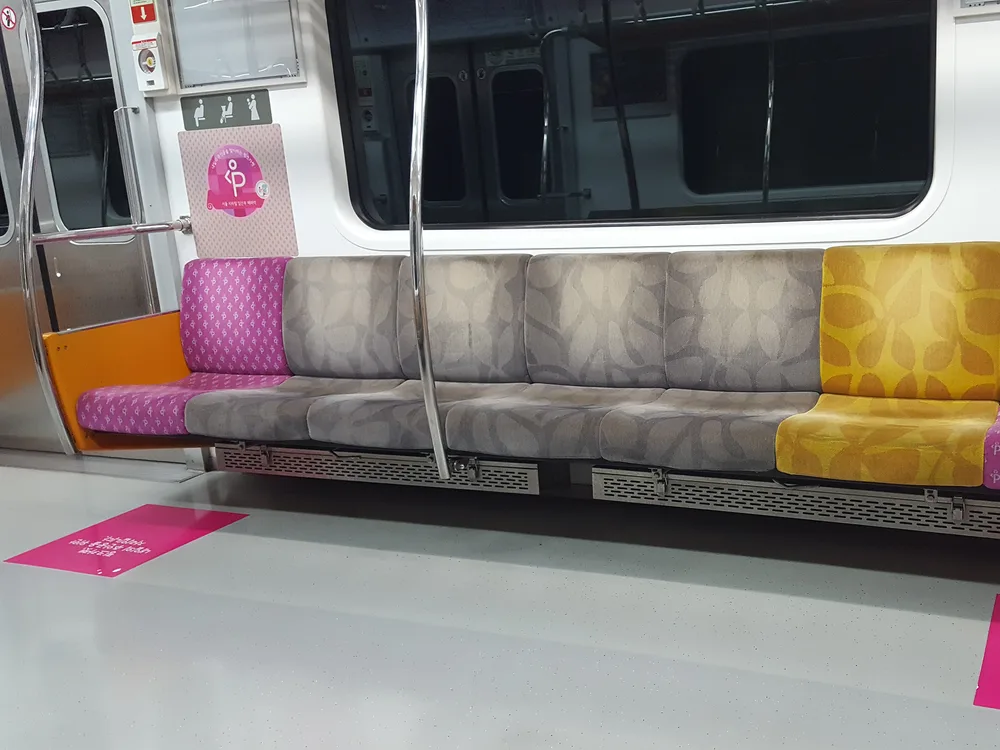
- Priority seats at the ends of each car — and the bright pink pregnancy seats — are left for the elderly, pregnant and disabled, and stay empty even when the car is full. Sitting in them as a visitor draws hard stares.
- Let people off before you board. Stand clear of the doors.
- No eating, keep phone calls short and quiet, and take a backpack off your shoulders in a crowded car.
- Rush hours (about 07:30–09:00 and 18:00–19:30) on Lines 2 and 9 are genuinely crushing — avoid them with luggage if you can.
Useful to know
- Toilets are inside the paid area at most stations — go before you tap out.
- Free Wi-Fi on trains and platforms; larger stations have coin lockers.
- If you have a suitcase, look for the elevator icons — most stations are step-free, but not all, and the lift is sometimes at just one end.
The short version
- Get a T-money card at a convenience store and load cash. Consider the Climate Card for 3+ rides a day.
- Base fare ~₩1,400; transfers within ~30 min are free.
- Stations have a 3-digit number; directions are given by exit number — check it before you tap out.
- Use Naver Map or Kakao Map, never Google Maps.
- Last trains around midnight; leave the pink seats empty.
Related reading
Getting in from the airport is covered in How to Get from Incheon Airport to Seoul. Once you’re moving, 5 must-visit places in Seoul is the first-trip shortlist, and a few essential Korean phrases help when you need to ask which exit.
Sources
- Seoul Metropolitan Subway — Wikipedia (accessed 2026-08-31)
- T-money — Wikipedia (accessed 2026-08-31)
- Official Korea Tourism site (VisitKorea) — getting around — Korea Tourism Organization (accessed 2026-08-31)