Best Summer Day Trips from Seoul: 5 Ways to Beat the Heat
Where to go from Seoul when it's hot and humid — a lotus garden and river confluence in Yangpyeong, lake-side Chuncheon, Pocheon's quarry lake, a cool cave in Gwangmyeong, and shaded Nami Island.
A Seoul summer is hot, sticky, and comes with a rainy stretch — the jangma monsoon — usually somewhere in July. So the day-trip strategy shifts: you want water, deep shade, or somewhere that’s just plain cool. These five deliver one of those three.
Which one should you pick?
| Trip | How it beats the heat | Travel time (one way) | Effort |
|---|---|---|---|
| Gwangmyeong Cave | It’s ~12 °C inside, all year | ~40–60 min by subway + a bus | Very low |
| Yangpyeong (Semiwon + Dumulmeori) | Riverside, lotus ponds, morning mist | ~1 hr 10 by subway | Low |
| Chuncheon | A lake, a shaded rail bike, cold noodles | ~1 hr 20 by train | Medium |
| Pocheon Art Valley | A cold, deep quarry lake in a rock canyon | ~1.5–2 hr by bus | Medium |
| Nami Island | Full tree-shade, river breeze, a zipline | ~1 hr 20 by train + hop | Medium |
1. Gwangmyeong Cave
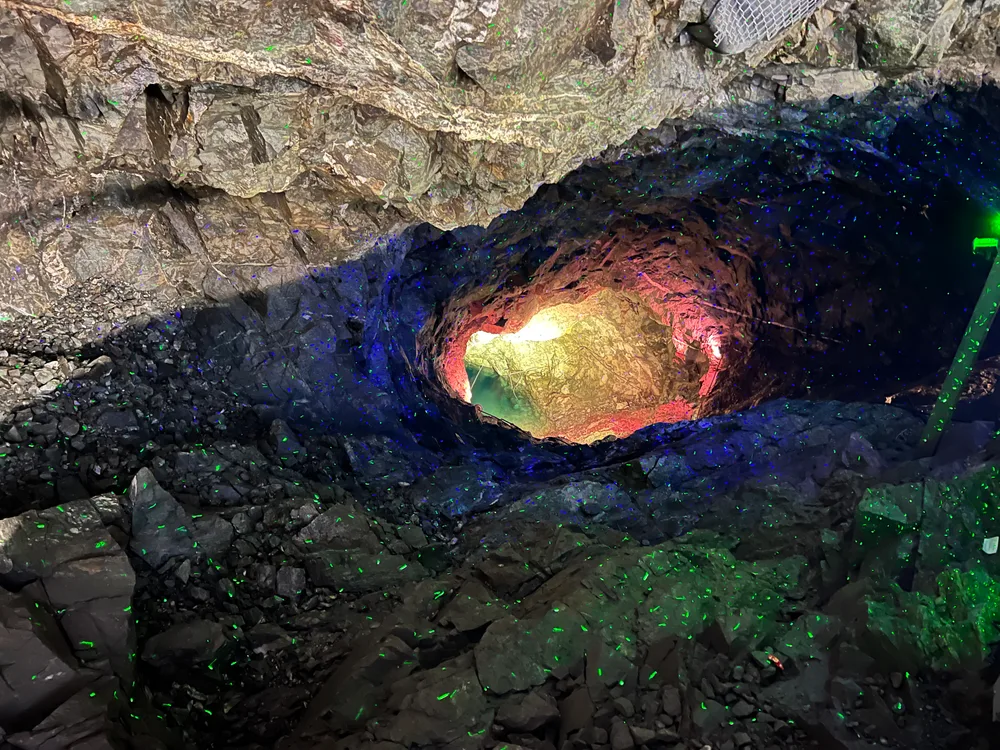
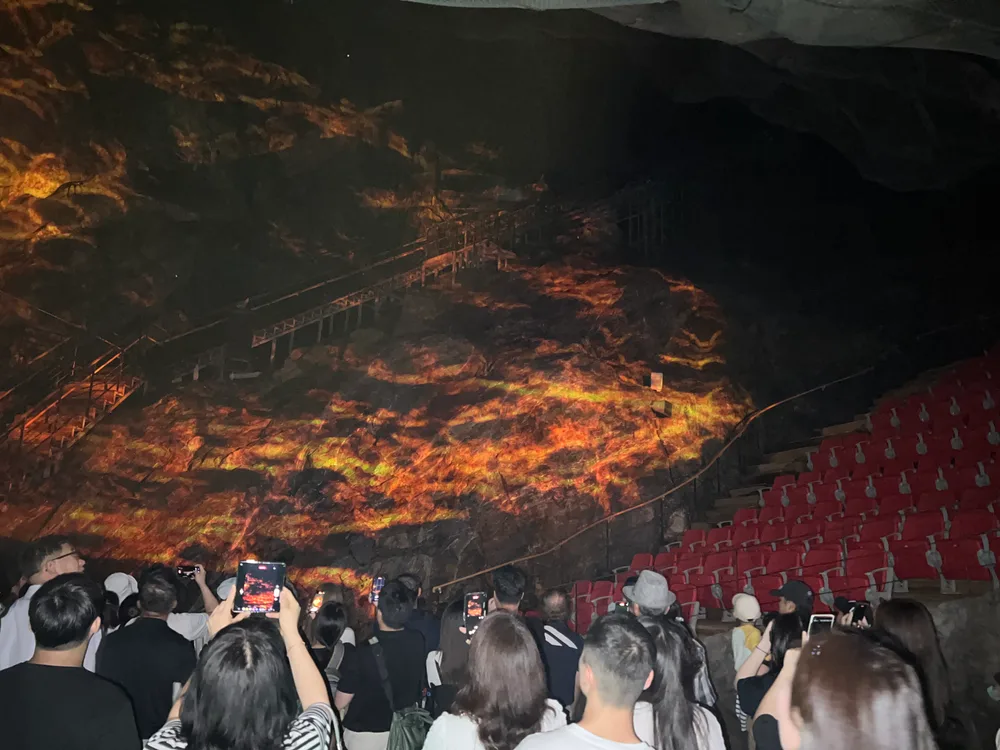
This is the cheat code for a heatwave. Gwangmyeong Cave is a former gold-and-silver mine that’s been turned into an underground theme park, and it holds a steady temperature of around 12 °C — bring a layer even in August. Inside there’s a long “Golden Road”, an underground lake, light installations, a cave wine cellar, and a hall used for projection shows. It’s small, it’s a bit kitsch, and on a 35 °C day it is genuinely blissful.
Gwangmyeong Cave
Gwangmyeong, Gyeonggi Province
A constant ~12 °C inside, whatever the weather is doing outside. The single most effective way to escape a Seoul heatwave for an afternoon.
- Best time
- Any hot day; bring a light jacket
- Getting there
- Subway Line 1 to Gwangmyeong Station, then bus 17 from near exit 7/8 (~10–15 min). Adult admission is about ₩6,000 — check current rates.
2. Yangpyeong: Semiwon and Dumulmeori
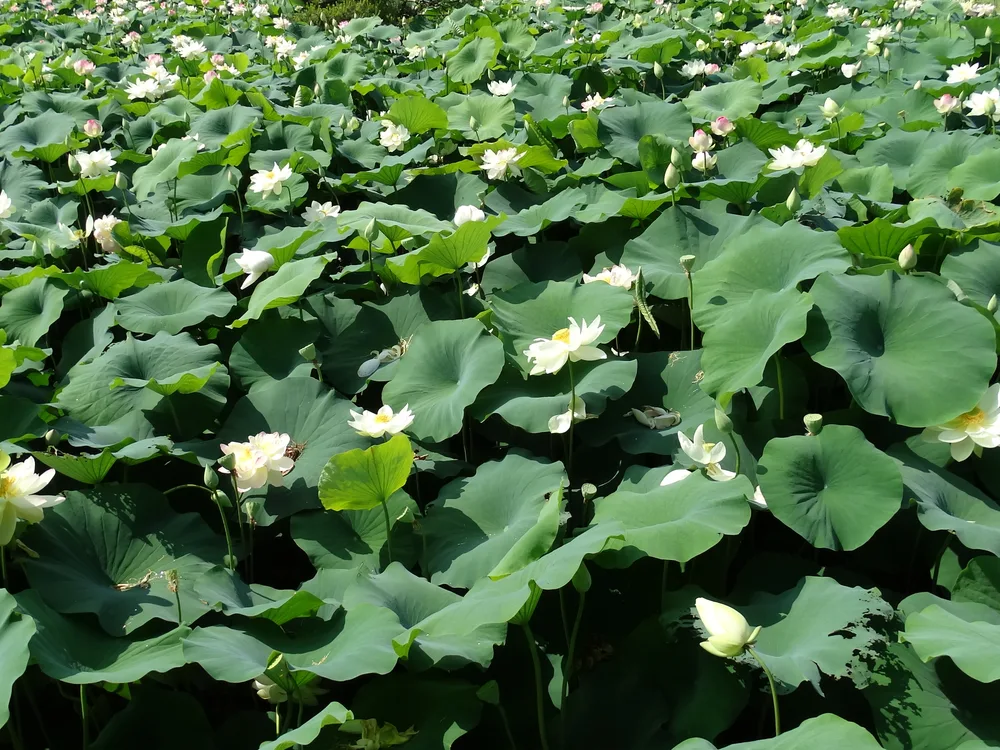
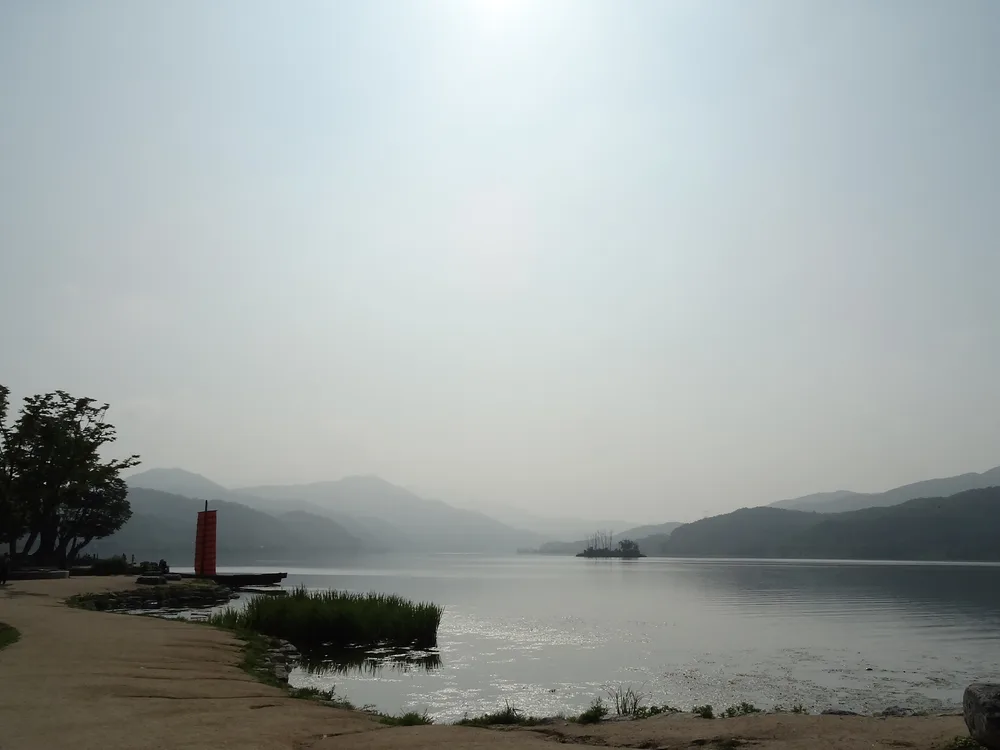
Two spots, right next to each other, on the river east of Seoul. Semiwon is a water garden built around lotus ponds; the lotus is at its best from late June into mid-August, which is exactly when you want a reason to be near water. A short walk away, Dumulmeori is the point where the Bukhan and Namhan rivers merge — a photogenic old zelkova tree, a moored sail-boat, and, if you come at dawn, mist coming off the water.
Semiwon & Dumulmeori
Yangsu-ri, Yangpyeong, on the Han River
Lotus in full bloom over July and August, plus the river confluence next door. A cool, low-effort morning by the water.
- Best time
- Late June to mid-August for the lotus; early morning for the mist and the quiet
- Getting there
- Gyeongui–Jungang line to Yangsu Station (~70 min from central Seoul), then a ~10–15 minute walk. Semiwon admission is modest — confirm on the official site; Dumulmeori is free.
3. Chuncheon
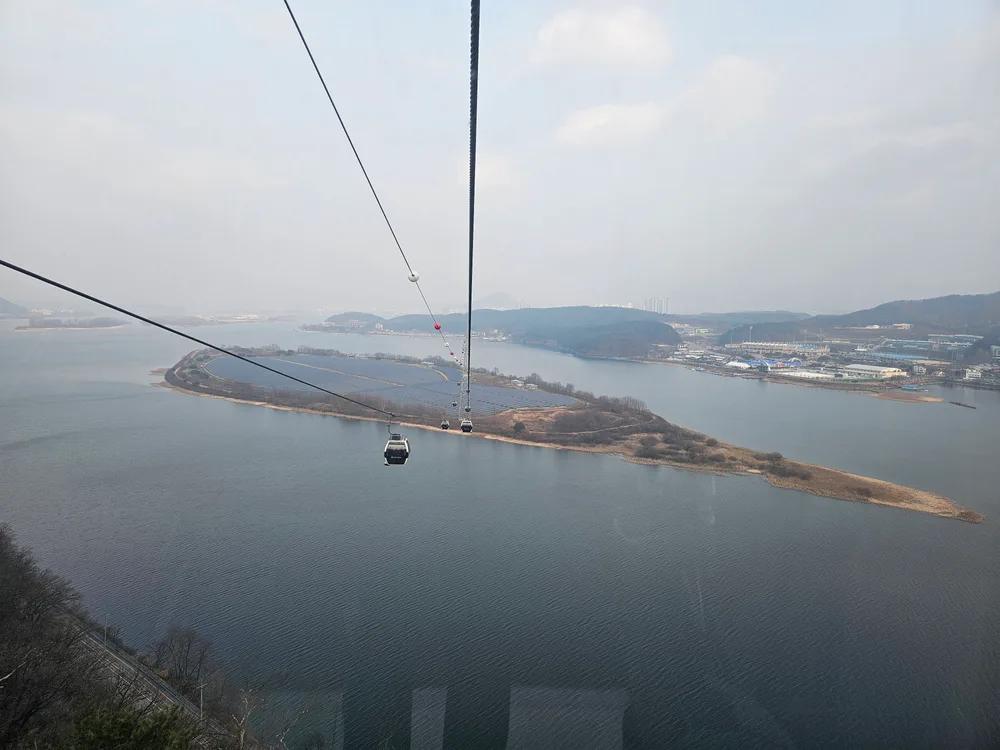
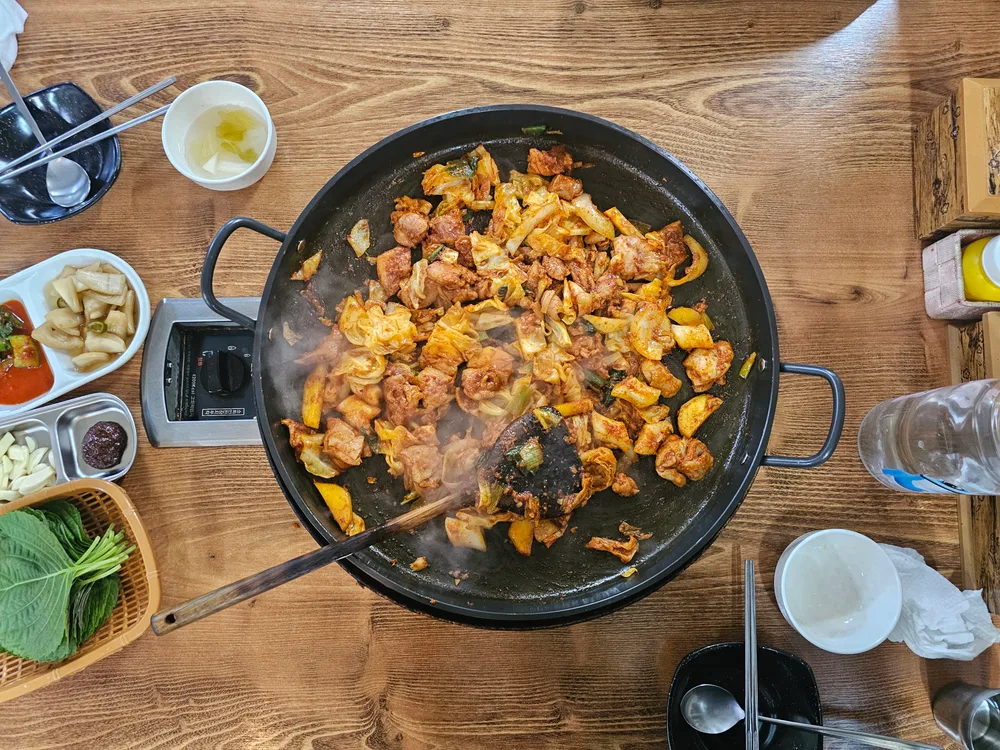
Chuncheon is a lake city, and in summer that’s the whole point. Uiam Lake wraps around the town; you can ride a cable car over it, take a ferry across, or do the Gangchon Rail Bike — about 8 km of old railway line along the river, with a couple of dark, cool tunnels along the way. Then eat: Chuncheon is the home of dak-galbi (spicy stir-fried chicken) and makguksu (cold buckwheat noodles), and the cold noodles in particular are a summer food.
Chuncheon
Gangwon Province, at the end of the Gyeongchun line
A lake, a shaded rail-bike ride, a cable car, and the country's best-known dak-galbi and cold noodles. A full, easy day out of the heat.
- Best time
- Any summer day; the rail bike books up on weekends
- Getting there
- ITX-Cheongchun or the Gyeongchun Line from Yongsan or Cheongnyangni (about 1 hr 10–20). Reserve the ITX seat.
4. Pocheon Art Valley
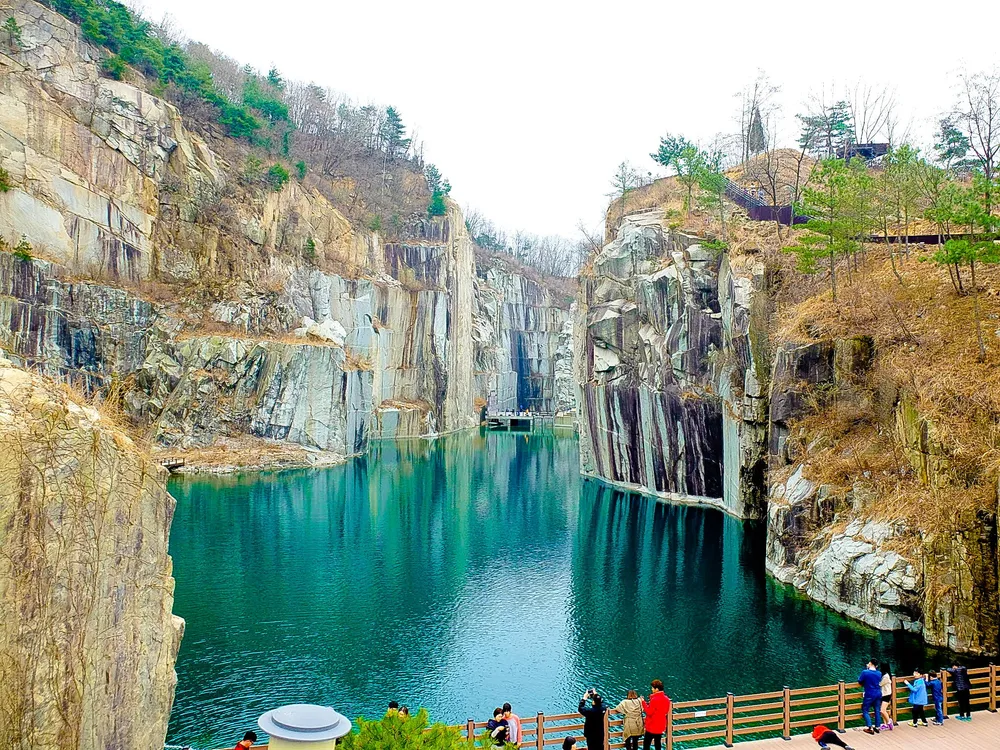
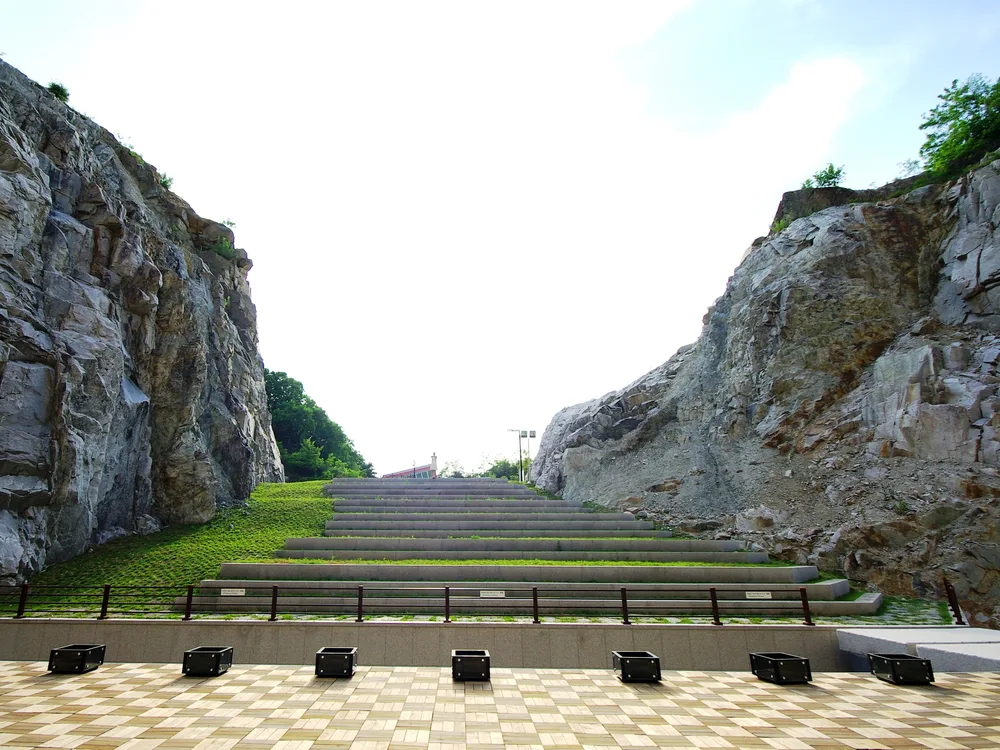
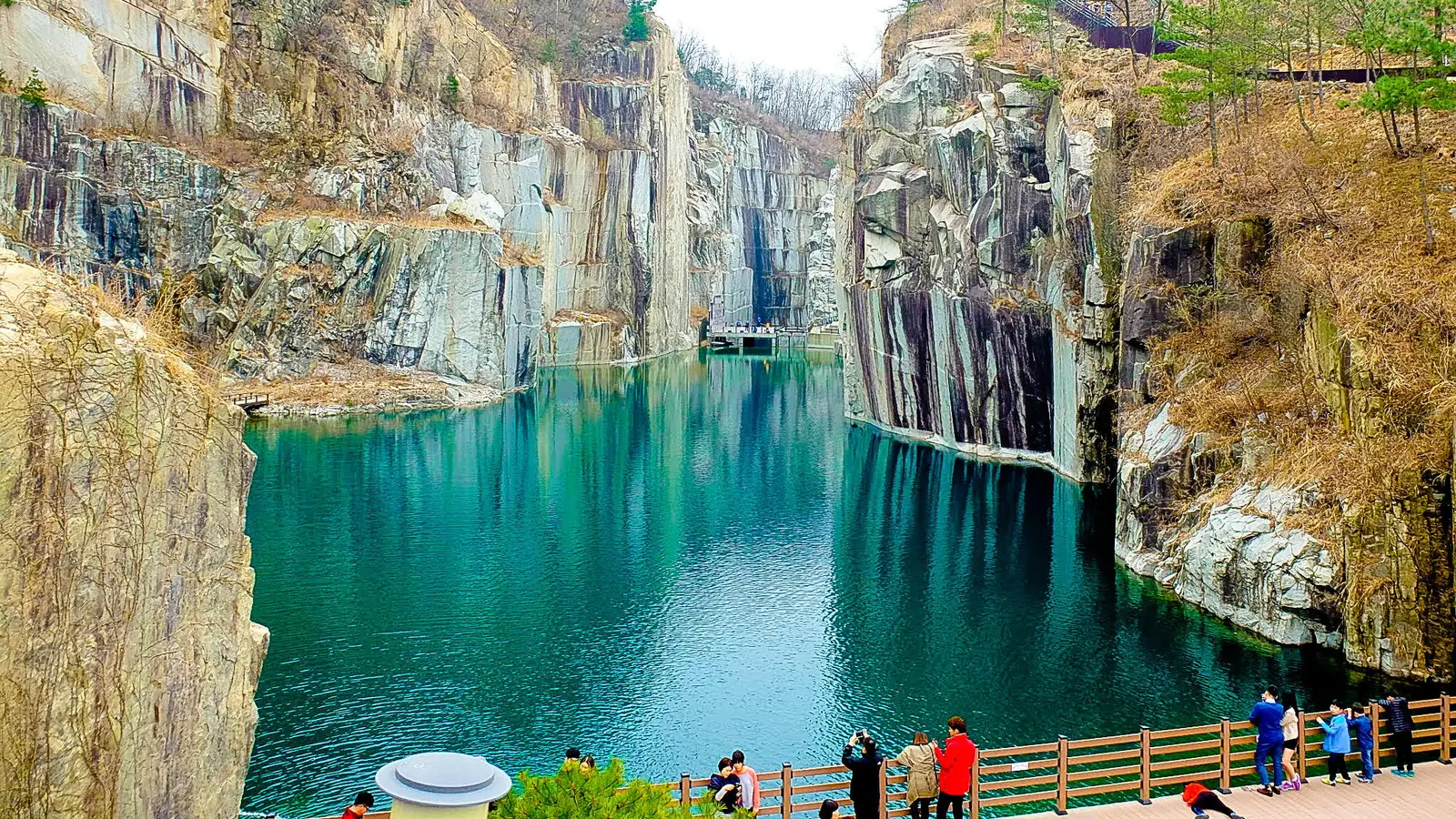
Pocheon Art Valley is a granite quarry that was abandoned, filled with groundwater, and reopened as a cultural park. The centrepiece is Cheonjuho, a deep quarry lake the colour of jade, walled in by sheer cut rock — and down in that stone bowl it stays notably cooler than the road above. There’s a monorail up, a sculpture trail, an amphitheatre, and a small astronomy museum.
The one catch: there’s no train. You’ll take a bus from Seoul (from around Dobongsan or Suyu station) and change to a local bus, or go on a tour.
Pocheon Art Valley
Pocheon, Gyeonggi Province
A jade-green lake in a granite canyon that holds the cool. The most dramatic-looking spot on this list.
- Best time
- Late morning; go up on the monorail, walk down
- Getting there
- No subway. Bus from Seoul (near Dobongsan / Suyu stations) toward Pocheon, then a local bus — roughly 1.5–2 hours — or a day tour. Adult admission about ₩5,000.
5. Nami Island
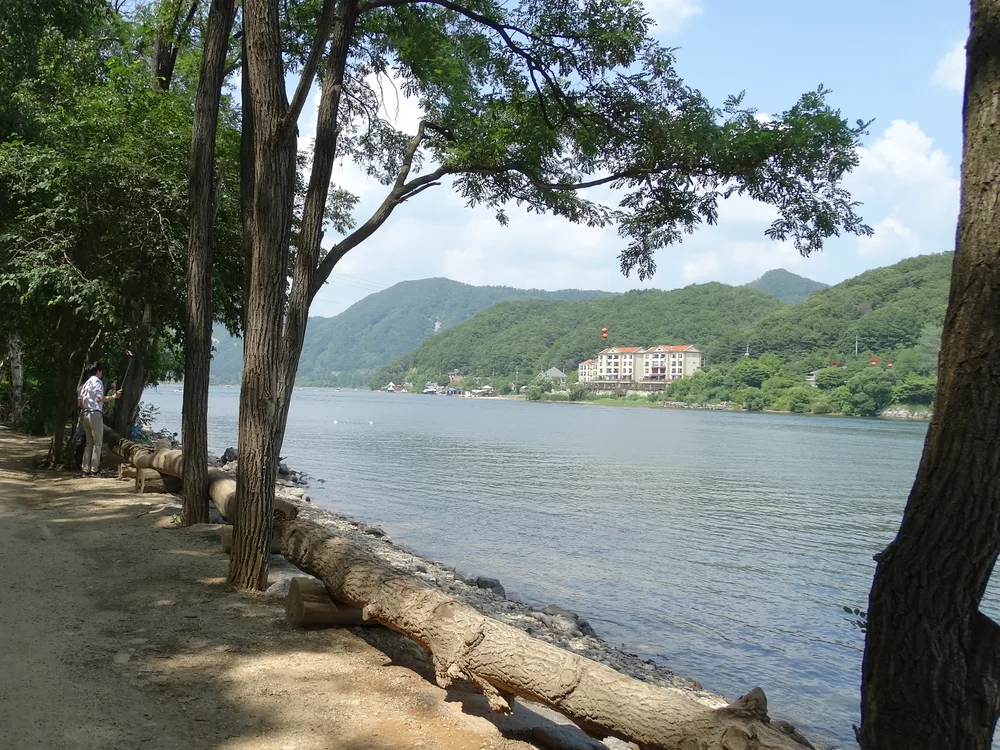
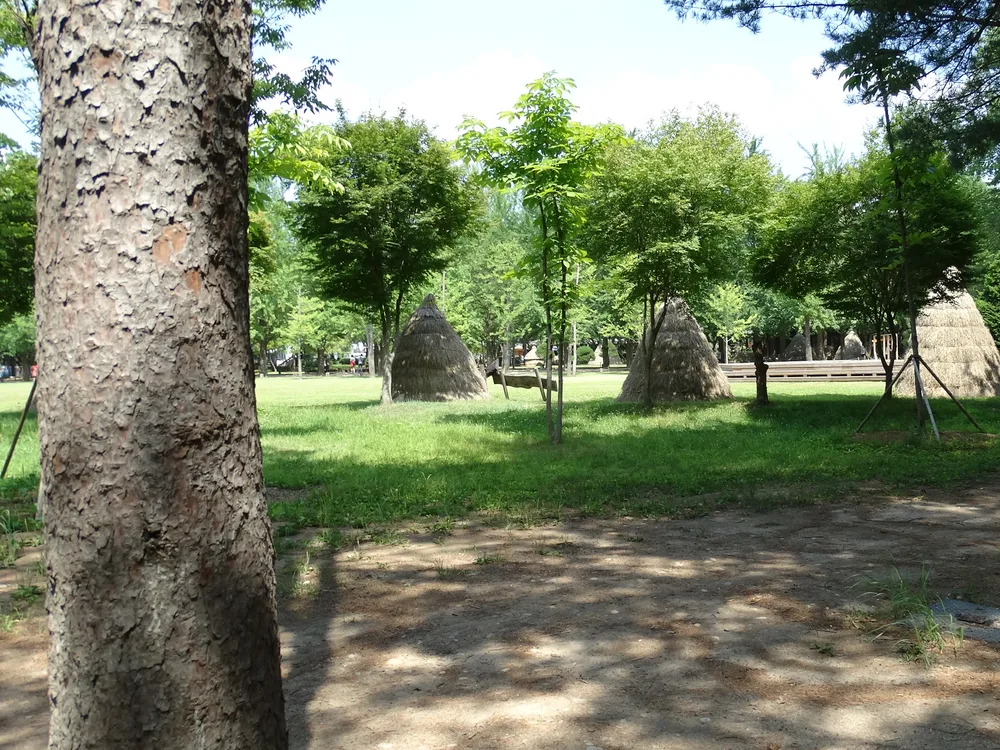
Nami turns up in every one of these seasonal lists, and summer is a fair case for it: the tree avenues are in full leaf, so most of the island is in shade, the river keeps the air a degree or two cooler, and there’s a zipline that drops you from the mainland onto the island instead of taking the ferry. Rent a bike, keep to the shaded paths, and it’s a comfortable hot-weather day.
Nami Island (Naminara)
Gapyeong / Chuncheon, on the Han River
Full tree-shade, a cooler riverside microclimate, bike rental, and a zipline onto the island. The classic trip, and it works in the heat.
- Best time
- First ferry to beat both the crowds and the midday sun
- Getting there
- ITX-Cheongchun to Gapyeong, then a shuttle bus or taxi to the wharf, then a 5-minute ferry (or the zipline). Combined ferry-and-entry ticket around ₩16,000 — check current rates.
Rainy-season notes
The jangma usually lands in July and can sit over the peninsula for a couple of weeks, with heavy downpours rather than all-day drizzle.
- On a wet day, Gwangmyeong Cave is the obvious call — it’s indoors and the transport is short.
- Chuncheon still works in rain (the rail bike and dak-galbi don’t care about weather), but skip the cable car.
- Save Pocheon and Semiwon for a clear day — the quarry lake and the lotus ponds are the whole reason to go.
- Check the forecast the night before; the rain often comes in bands with dry gaps.
My honest ranking
- Gwangmyeong Cave — nothing else beats the heat this reliably, and it’s a short trip.
- Yangpyeong — lotus season is short and worth catching, and it’s an easy morning.
- Chuncheon — the most to do: lake, rail bike, and the food is the point.
- Pocheon Art Valley — the best-looking, but the bus journey costs you time.
- Nami Island — reliable and shaded, though you’re sharing it with everyone else.
Related reading
Part of a season-by-season series — see Best Spring Day Trips from Seoul, the year-round Best Day Trips from Seoul, and, for the food angle, the Food section.
Sources
- Official Korea Tourism site (VisitKorea) — Korea Tourism Organization (accessed 2026-08-28)
- Semiwon Garden & lotus flowers near Seoul — Travel-Stained (accessed 2026-08-28)
- Gwangmyeong Cave guide — Trvlogue (accessed 2026-08-28)
- Pocheon Art Valley — Wikipedia (accessed 2026-08-28)
- Chuncheon — Wikipedia (accessed 2026-08-28)