Best Winter Day Trips from Seoul: 5 Places for Snow, Lights and Ice
Where to go from Seoul in the cold months — Nami Island under snow, the Namhansanseong and Suwon fortress walls in the snow, snowy Bukhansan, and the Hwacheon ice-fishing festival.
A Seoul winter is cold and dry, with a handful of real snowfalls between December and February and a lot of clear, bitter days in between. It’s a good season for two kinds of day trip: a fortress wall or a mountain trail under fresh snow, and the big ice-and-snow festival that runs on a fixed schedule whether or not it has snowed that week.
Here are five trips for the cold months, from a short walk out to Namhansanseong to the full ice-festival expedition.
Which one should you pick?
| Trip | The winter draw | Travel time (one way) | Effort |
|---|---|---|---|
| Nami Island | Snow on the tree avenues; Winter Sonata | ~1 hr 20 by train + hop | Medium |
| Namhansanseong | A mountain fortress wall in the snow | ~1 hr by subway + bus | A gentle walk |
| Suwon Hwaseong | A UNESCO fortress wall, snow on the tiled roofs | ~1 hr by subway | Low–medium |
| Bukhansan | Real snow on granite, on the metro | ~40–60 min by subway | A winter hike |
| Hwacheon Ice Festival | Ice fishing with thousands, on a frozen river | ~2 hr by bus | A long day / a tour |
1. Nami Island
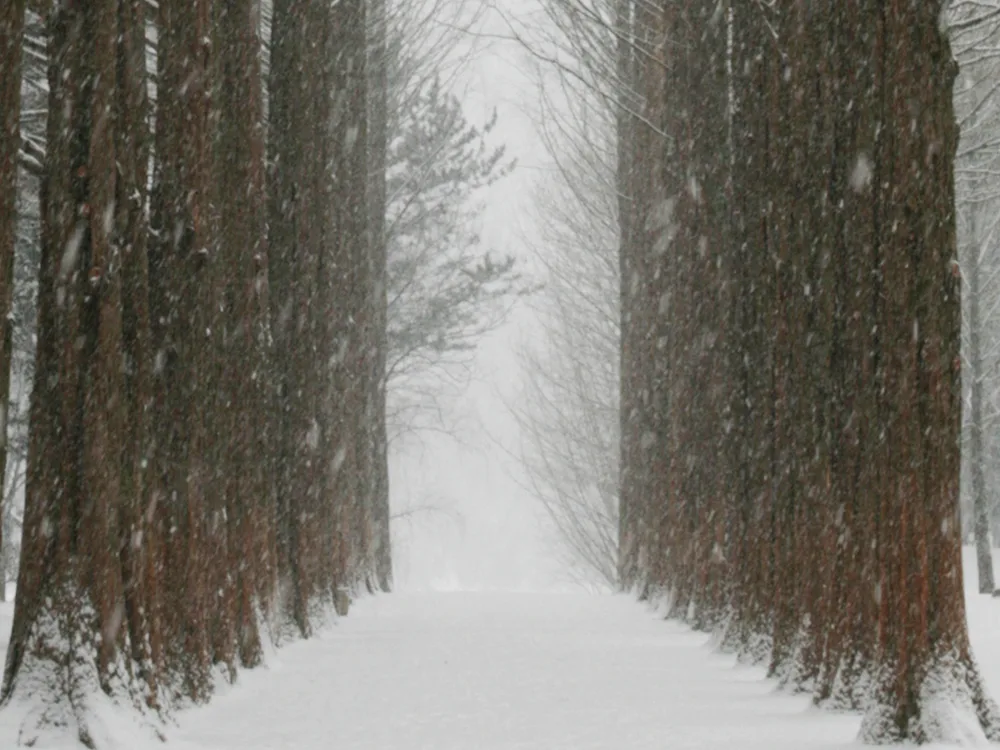
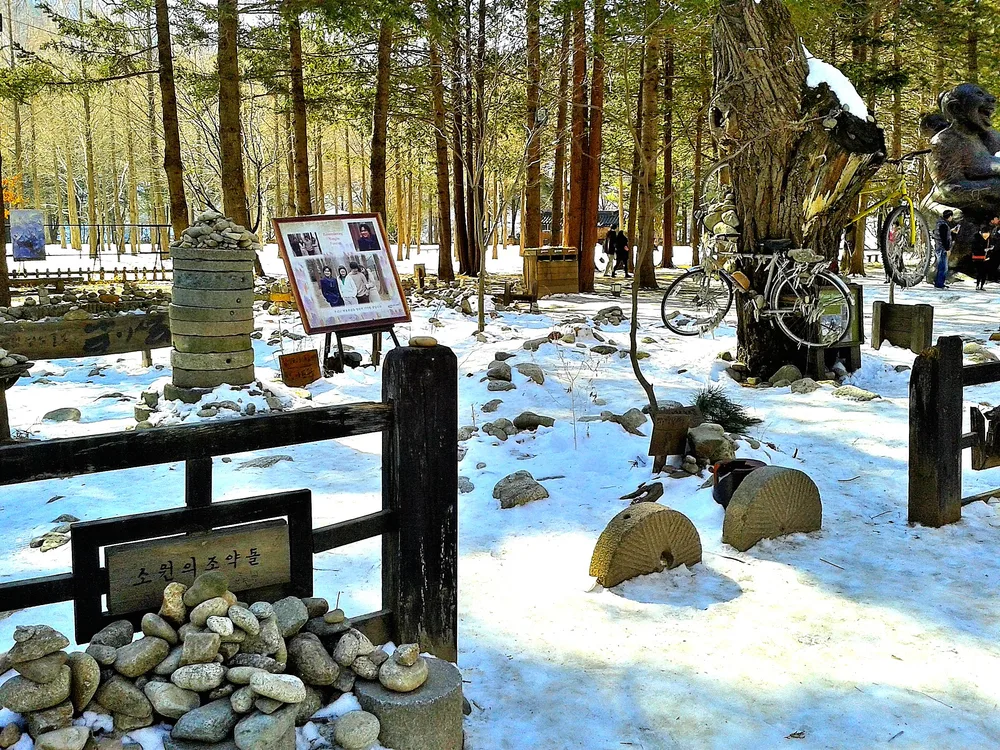
Nami turns up in all four of these seasonal lists, and winter might be its most famous look — the 2002 drama Winter Sonata was filmed here, and the poster shot is the tree-lined lane under snow. When it does snow, the metasequoia and ginkgo avenues become white tunnels and the whole island goes quiet.
The catch is that snow isn’t guaranteed on any given day. Even without it, the bare avenues and the frozen-edged river are a good winter walk — just dress for it. The wind coming off the water is a lot colder than central Seoul, and some paths get icy.
Nami Island (Naminara)
Gapyeong / Chuncheon, on the Han River
The classic snowy tree avenues and the Winter Sonata association. The most photogenic winter trip on this list when the snow lands right.
- Best time
- A weekday after a fresh snowfall, if you can time it; first ferry either way
- Getting there
- ITX-Cheongchun to Gapyeong, then a shuttle bus or taxi to the wharf, then a 5-minute ferry (or the zipline). Combined ferry-and-entry ticket around ₩16,000 — check current rates.
2. Namhansanseong
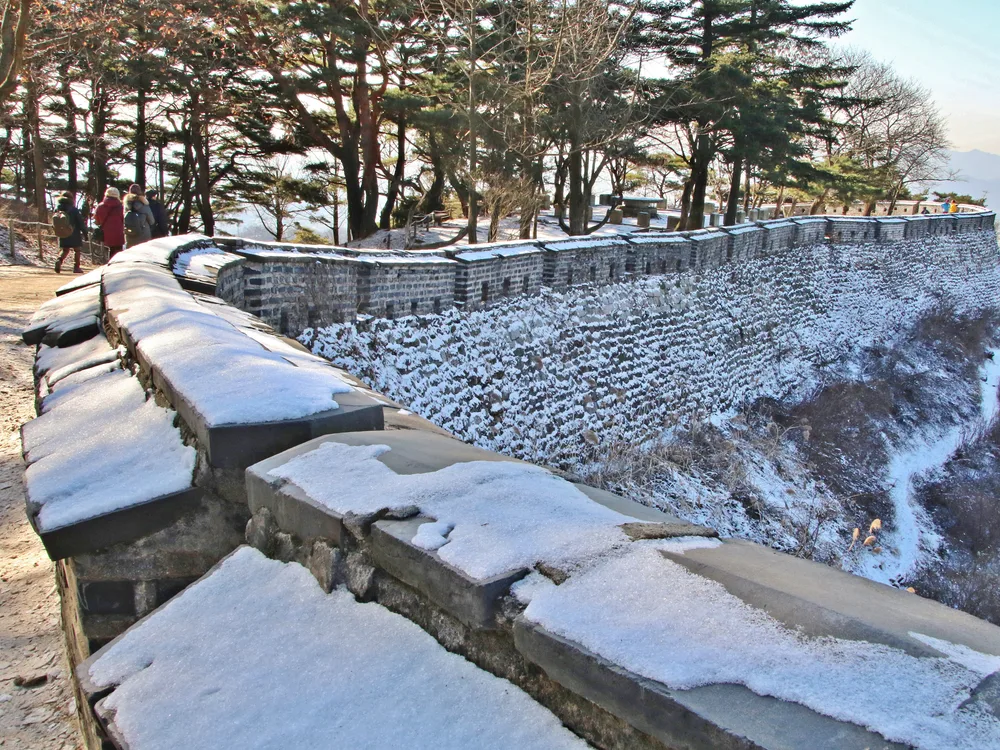
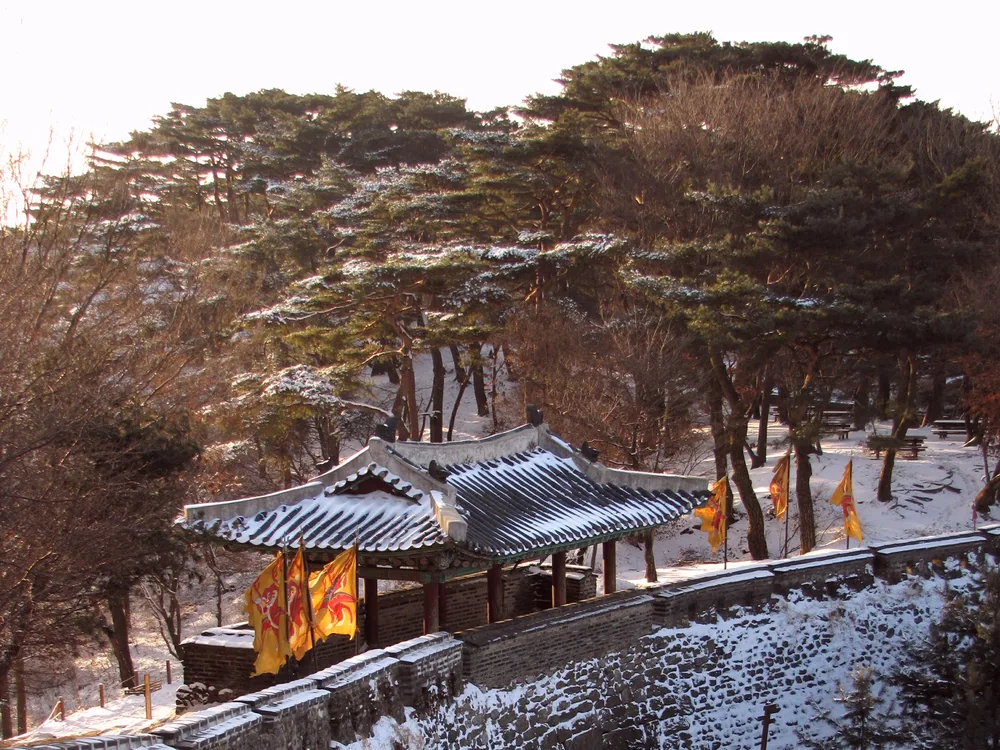
Namhansanseong is a mountain fortress just south-east of Seoul — a UNESCO site, a 12 km stone wall running along a forested ridge, with gates, pavilions and a small walled village of restaurants inside. In winter the wall and the pines hold the snow and the crowds thin out, and because the whole loop sits on a ridgeline you get long views over the white hills toward the city.
You don’t have to walk the full circuit. From the South Gate (Nammun) it’s a gentle hour or so along the wall to the main pavilions and back, on a wide, mostly level path — the easiest real “snow walk” on this list. Warm up afterwards with a bowl of something in the village.
Namhansanseong
Gwangju / Seongnam, Gyeonggi Province — south-east of Seoul
A UNESCO fortress wall on a wooded ridge that takes snow beautifully, with ridge-top views and a village of hot food inside the gates. An easy walk, close in.
- Best time
- A clear day a day or two after snow; late morning
- Getting there
- Subway Line 8 to Sanseong Station, then bus 9 or 52 up to the South Gate (~15 min) — about an hour from central Seoul all in. Entry to the walls is free.
3. Suwon Hwaseong Fortress
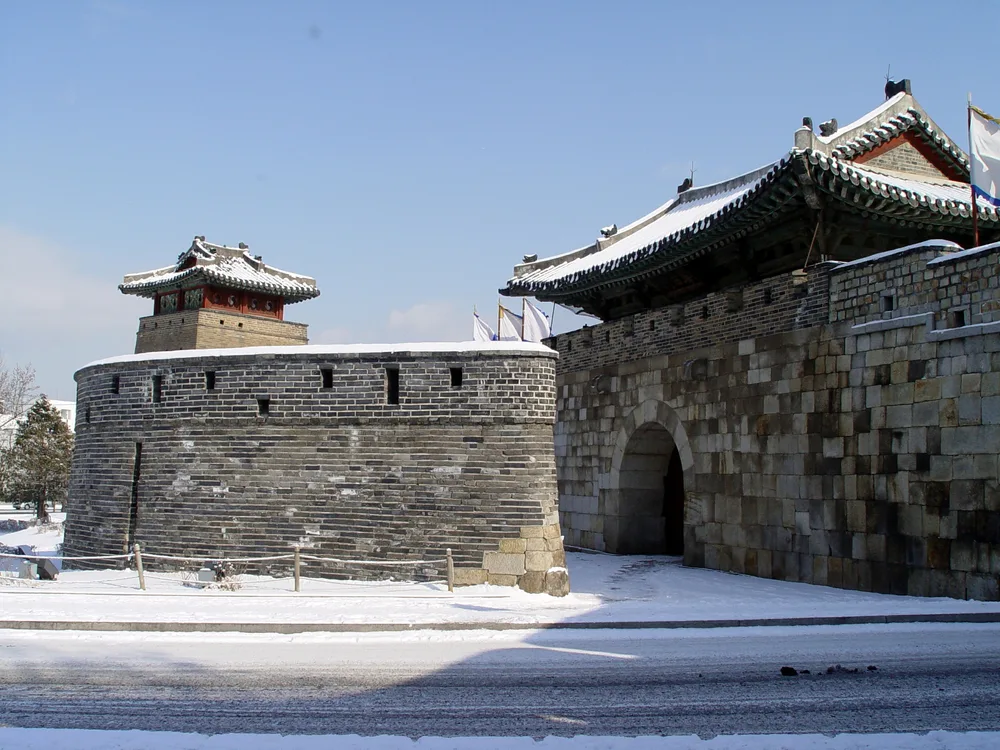
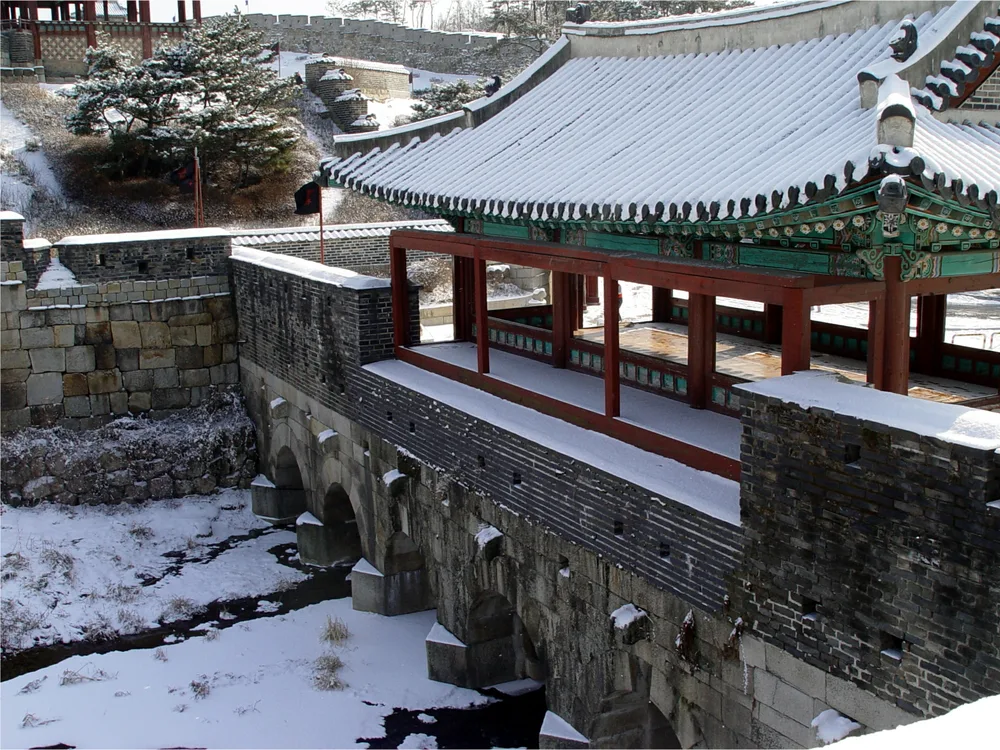
Suwon’s UNESCO fortress wall is the shortest trip on this list, and a light snowfall is the best time to walk it — the black brick and grey granite pick up a white line along every parapet, and the tiled roofs of the gates and pavilions carry a clean load of snow. The full loop is about 5.7 km; on a cold day, the walk up Paldalsan hill to the Seojangdae command post and back down past Hwahongmun, the arched water gate, is enough.
It’s also the easiest to bail out of when your hands go numb — you’re never far from a café or the covered market by Paldalmun.
Hwaseong Fortress (화성)
Suwon, Gyeonggi Province
A 5.7 km fortress wall you can loop in a couple of hours, its gates and pavilions under snow, an hour from central Seoul and never far from somewhere warm.
- Best time
- The morning after a snowfall, before it's walked to slush
- Getting there
- Subway Line 1 to Suwon Station (~1 hr from central Seoul), then a local bus or ~15-min walk to Paldalmun gate. Walking the walls is free.
4. Bukhansan National Park
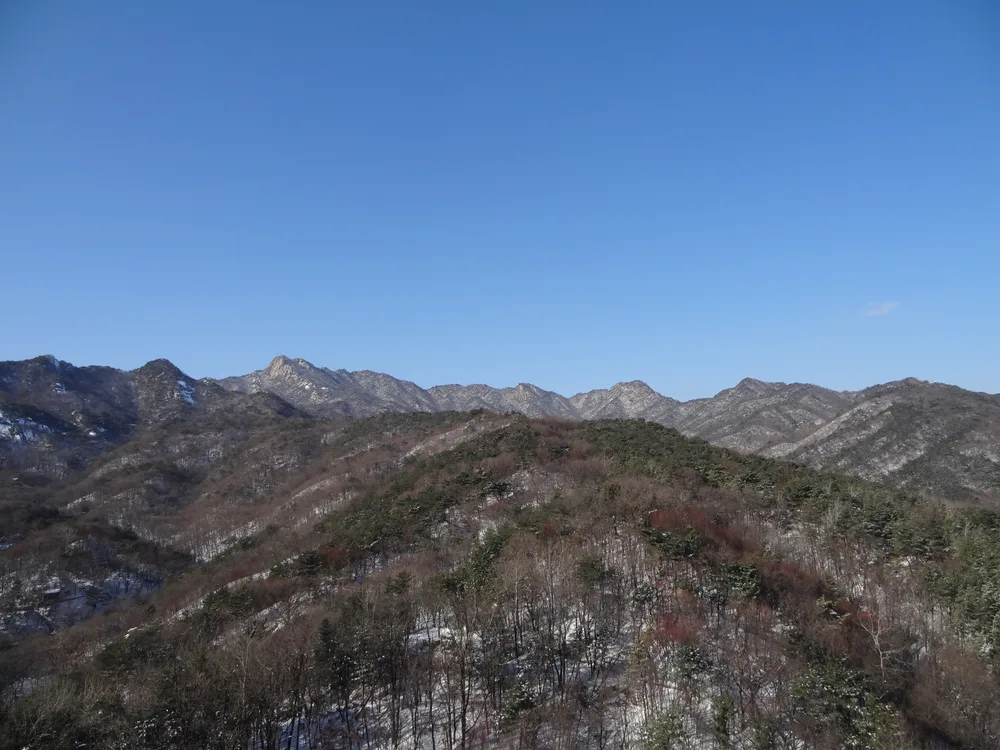
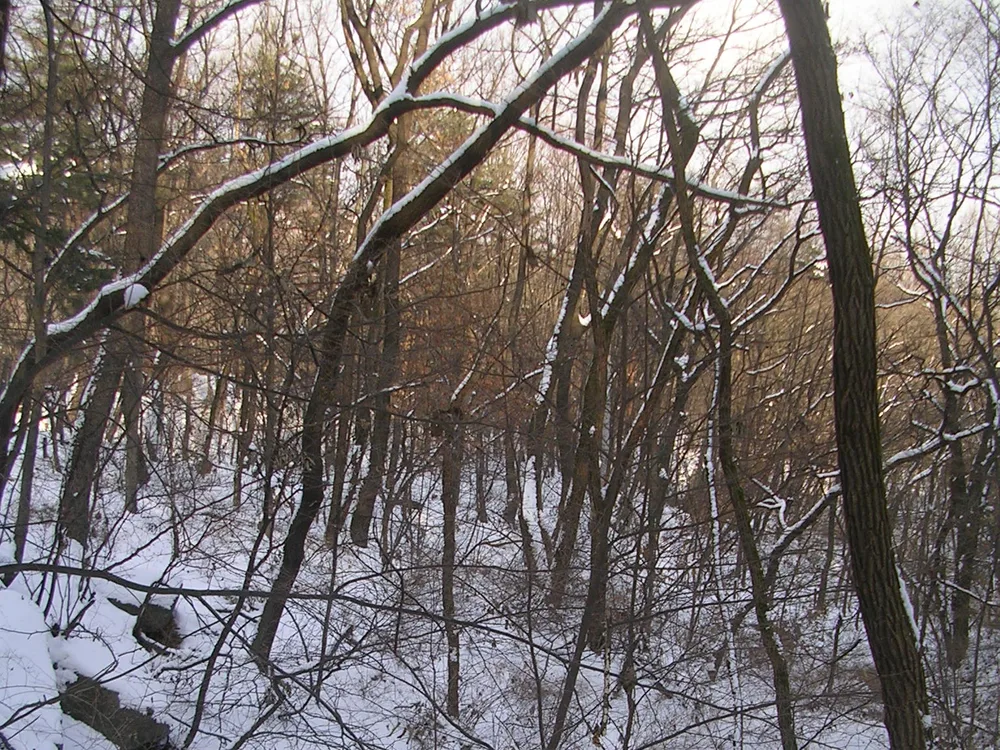
Bukhansan is the closest of these — a national park on the metro — and after a snowfall the granite peaks and the pine-and-oak forest below hold it for days. In winter the sensible route is a lower one: a stretch of the Bukhansan Dulle-gil, the circuit trail that rings the base, or a short climb to a valley temple. Leave the high routes like Baegundae for another season unless you’ve brought crampons (아이젠) — the exposed rock ices up and the drop-offs are real.
Winter days are short. Start early, tell someone your route, and plan to be back down by mid-afternoon.
Bukhansan National Park
Northern edge of Seoul (also Gyeonggi)
Genuine snow on granite within the city limits, free, and reachable on the subway. The only winter trip here you can decide on over breakfast.
- Best time
- A clear day a day or two after snow; lower trails only
- Getting there
- Metro to Gupabal (Line 3) then a bus to the Bukhansanseong trailhead, or the Bukhansan Ui LRT for the Ui valley side. Park entry is free.
5. Hwacheon Sancheoneo Ice Festival
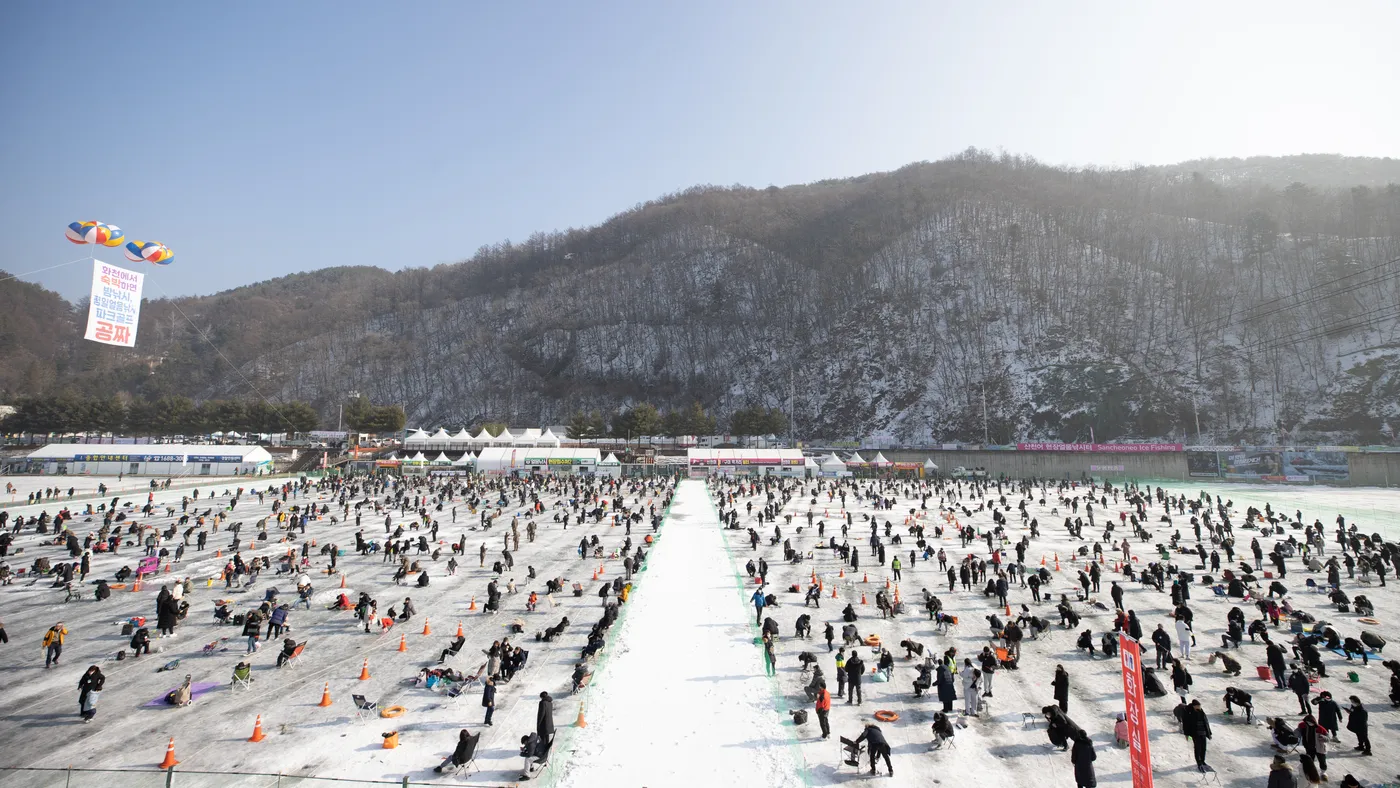
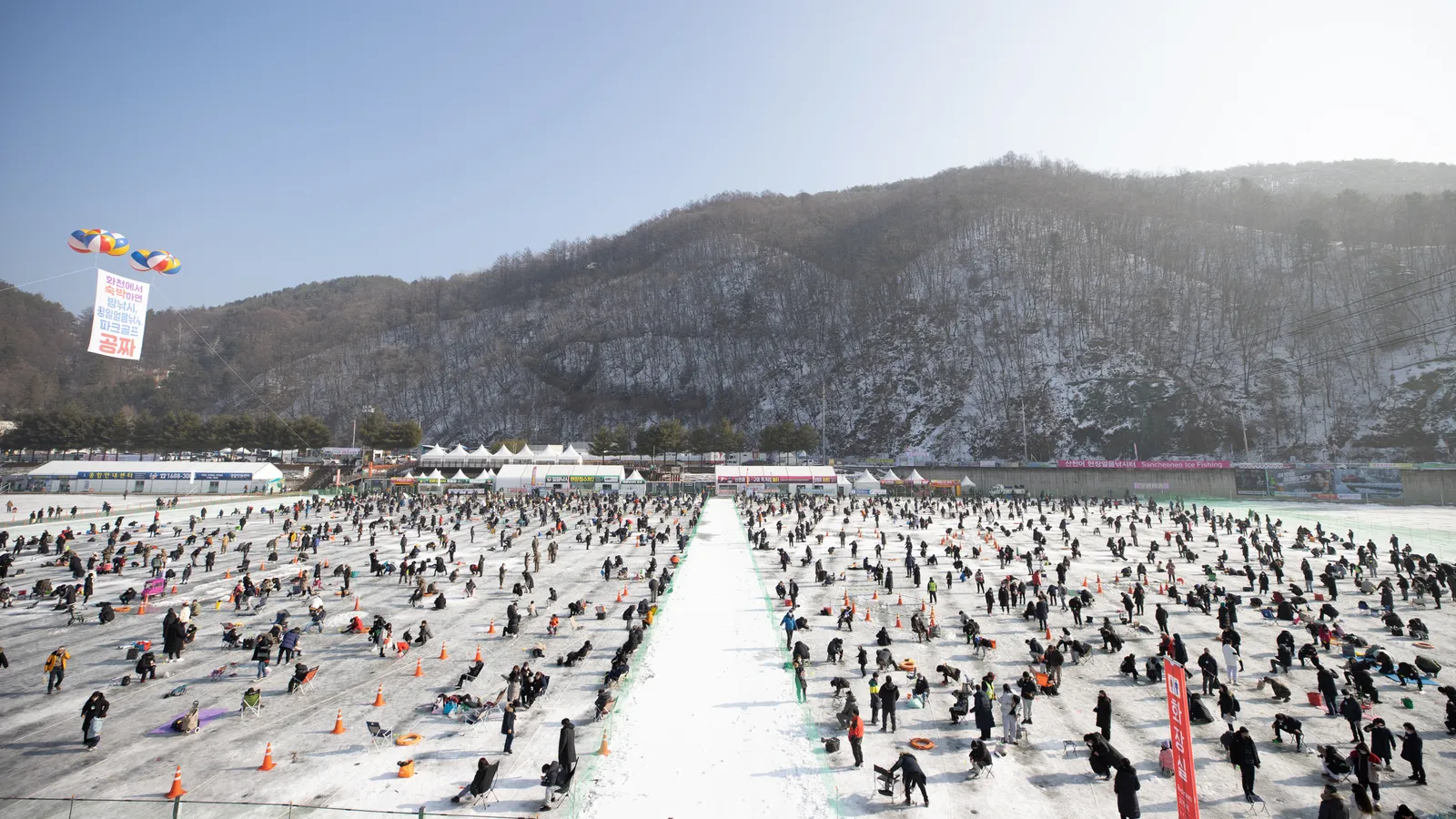
This is the big one. For about three weeks in January, the frozen Hwacheon River fills with tens of thousands of people fishing through drilled holes for sancheoneo (mountain trout), alongside bare-hand fishing pools, ice sledding, and sculptures. It’s one of Korea’s largest winter festivals and it draws a serious international crowd.
Two honest notes. It’s date-dependent — the festival waits on the ice being thick enough, so exact dates shift each year and a warm winter can shorten or cancel it. And it’s a long day: Hwacheon has no train, so it’s an intercity bus from Dong Seoul (around two hours) plus a local shuttle, or an organised day tour — which is how most visitors do it.
Hwacheon Sancheoneo Ice Festival
Hwacheon, Gangwon Province
The definitive Korean winter day out — ice fishing with a crowd of thousands on a frozen river ringed by snowy mountains. Worth the travel once.
- Best time
- Mid-January, on the published festival dates; a weekday if you can
- Getting there
- Intercity bus from Dong Seoul Bus Terminal to Hwacheon (~2 hr), then a local shuttle to the venue — or an organised day tour from Seoul, which most people take. Check the official festival site for that year's dates.
How to plan a winter day trip
- The snow walks need snow; the ice festival doesn’t. Namhansanseong, Suwon and Bukhansan are best in the day or two after a snowfall — and real snow in the Seoul area only comes a handful of times a winter, so watch the forecast. Hwacheon’s ice festival runs on published dates regardless.
- January is the safe bet for ice and cold. December can be mild; late February starts to thaw.
- Dress past what central Seoul needs. The ridgelines and the Hwacheon river valley run several degrees colder, with wind. Layers, real gloves, a hat, proper shoes with grip — the fortress paths get icy underfoot.
- Days are short. Sunset is around 5:30 in midwinter. Start early and plan to be off the wall or the trail by mid-afternoon.
- Two more options with an evening or a lift pass: the Garden of Morning Calm near Gapyeong runs a large after-dark Lighting Festival from about December to mid-March (train to Cheongpyeong + a bus), and Elysian Gangchon — a small ski resort on the Gyeongchun line with a free shuttle from Gangchon Station — is the closest slope to Seoul you can reach without a car.
- Check for Lunar New Year (설날) closures if you’re travelling around late January or February.
My honest ranking
- Nami Island — the most photogenic if the snow lands right, and an easy half-day; pair it with the Garden of Morning Calm lights in the evening.
- Hwacheon Ice Festival — the best single winter experience near Seoul, if you can give it a long day and the dates line up.
- Namhansanseong — the best snow walk: close in, gentle, ridge-top views, and hot food inside the gates.
- Suwon Hwaseong — history and snow on the shortest trip out, and never far from somewhere warm.
- Bukhansan — free, close, and properly beautiful under fresh snow — just keep to the lower trails.
Related reading
This completes a season-by-season series — see Best Spring Day Trips from Seoul, Best Summer Day Trips from Seoul, Best Autumn Day Trips from Seoul, and the year-round Best Day Trips from Seoul.
Sources
- Hwacheon Sancheoneo Ice Festival — Wikipedia (accessed 2026-08-29)
- Official Korea Tourism site (VisitKorea) — winter festivals — Korea Tourism Organization (accessed 2026-08-29)
- Namhansanseong — Wikipedia (accessed 2026-08-29)
- Nami Island (Naminara) — Wikipedia (accessed 2026-08-29)
- Hwaseong Fortress — Wikipedia (accessed 2026-08-29)