Best Autumn Day Trips from Seoul: 5 Places for Fall Foliage
Where to go from Seoul for autumn colour — Seoraksan's blazing valleys, Nami Island's golden avenues, the Garden of Morning Calm, Bukhansan, and Suwon — plus how to time the leaves.
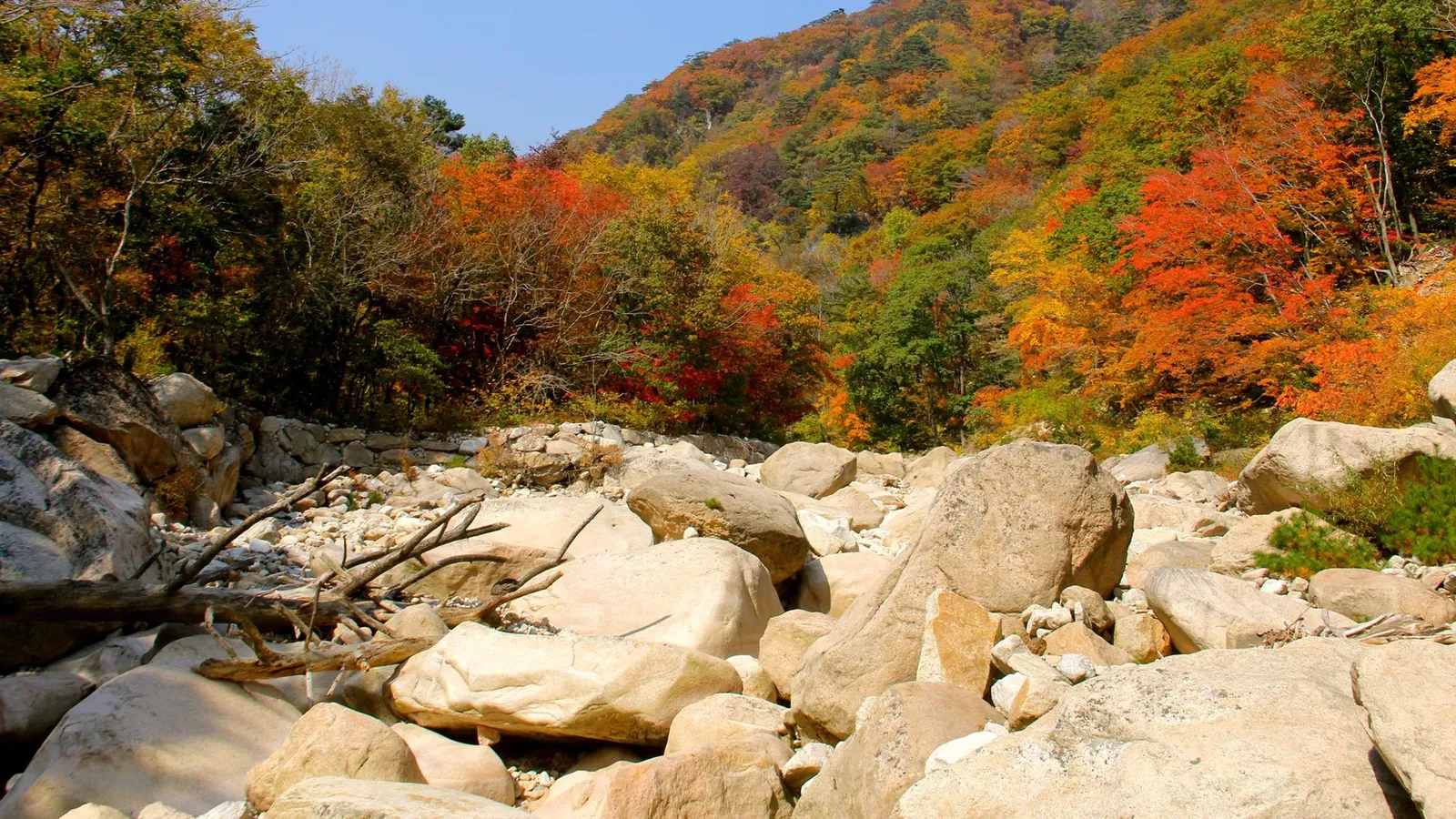
Korea does autumn extremely well. The colour starts in the high northern mountains in mid-October and moves south and downhill over about six weeks, so with a bit of planning you can catch two peaks: the mountains first, then Seoul and Gapyeong in the last week of October into early November.
Here are five trips for leaf season, from the full expedition to the quick one.
Which one should you pick?
| Trip | The autumn draw | Travel time (one way) | Effort |
|---|---|---|---|
| Seoraksan | Korea’s best foliage, on a dramatic granite massif | ~2.5 hr by bus | A long day / a tour |
| Nami Island | Golden ginkgo and metasequoia avenues | ~1 hr 20 by train + hop | Medium |
| The Garden of Morning Calm | Chrysanthemum show, maple, pink muhly | ~1 hr + a bus | Low |
| Bukhansan | Maple on the trails, granite peaks, city view | ~40–60 min by subway | A real hike |
| Suwon Hwaseong | Foliage along a fortress wall | ~1 hr by subway | Low–medium |
1. Seoraksan
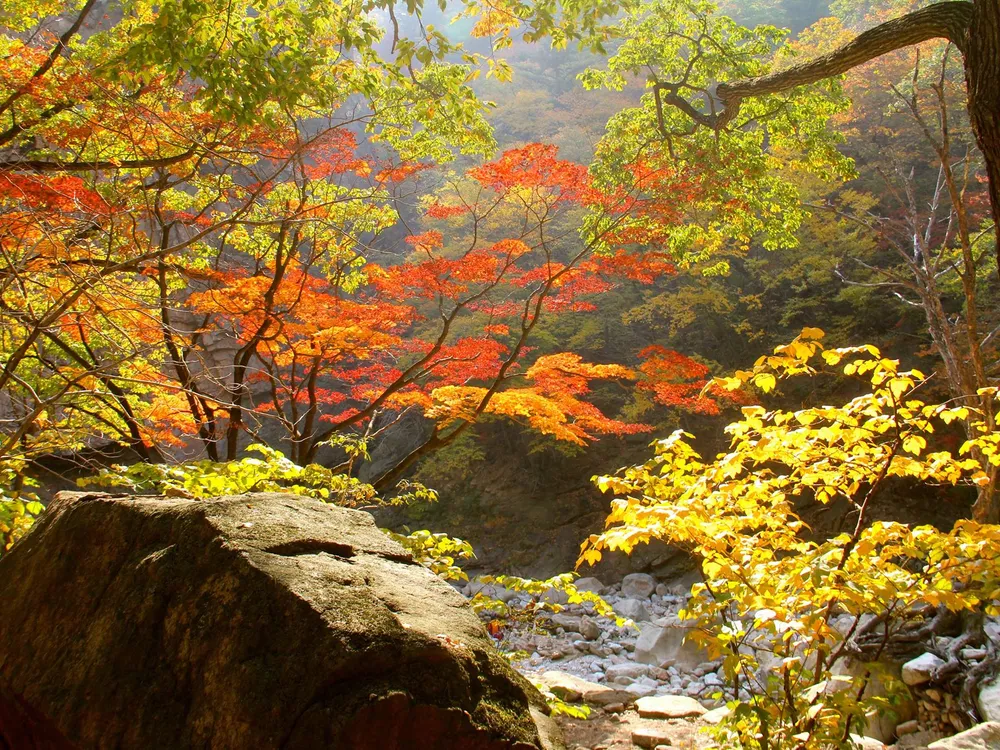
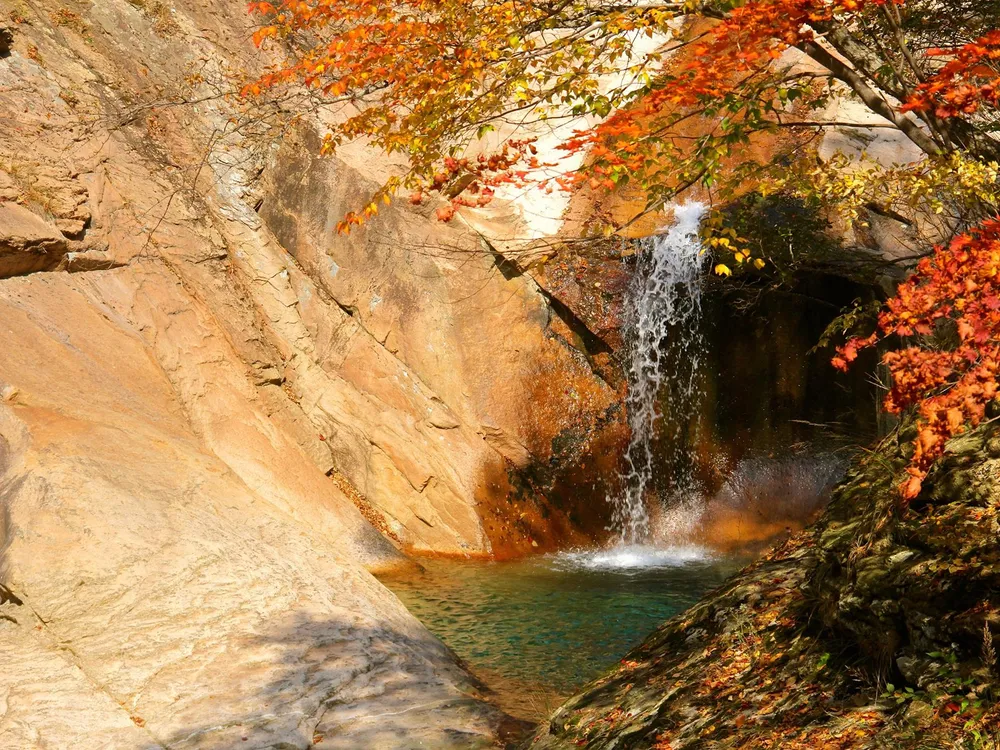
Seoraksan, on the east coast near Sokcho, is the mountain Koreans travel for in autumn. Sheer granite peaks, deep valleys, and a national park that turns properly red and gold — usually a week or two ahead of Seoul because it’s further north and higher up.
Be honest with yourself about the day, though. It’s around two and a half hours each way by express bus, and by the time you’ve walked to Biryong Falls or ridden the cable car up to Gwongeumseong and come back, you’ve used twelve or thirteen hours. Most people do it as an organised day tour, and unless you’re happy with a 5 a.m. start, that’s the sensible call.
Seoraksan National Park
Sokcho, Gangwon Province — east coast
The best autumn foliage within day-trip range of Seoul, on Korea's most dramatic granite range. Worth the travel once.
- Best time
- Mid-to-late October, when the mountains peak before the lowlands
- Getting there
- Express bus from Seoul (Central City / Dong Seoul terminals) to Sokcho or the Seorak-dong entrance, ~2.5 hr — or an organised day tour, which most people take.
2. Nami Island
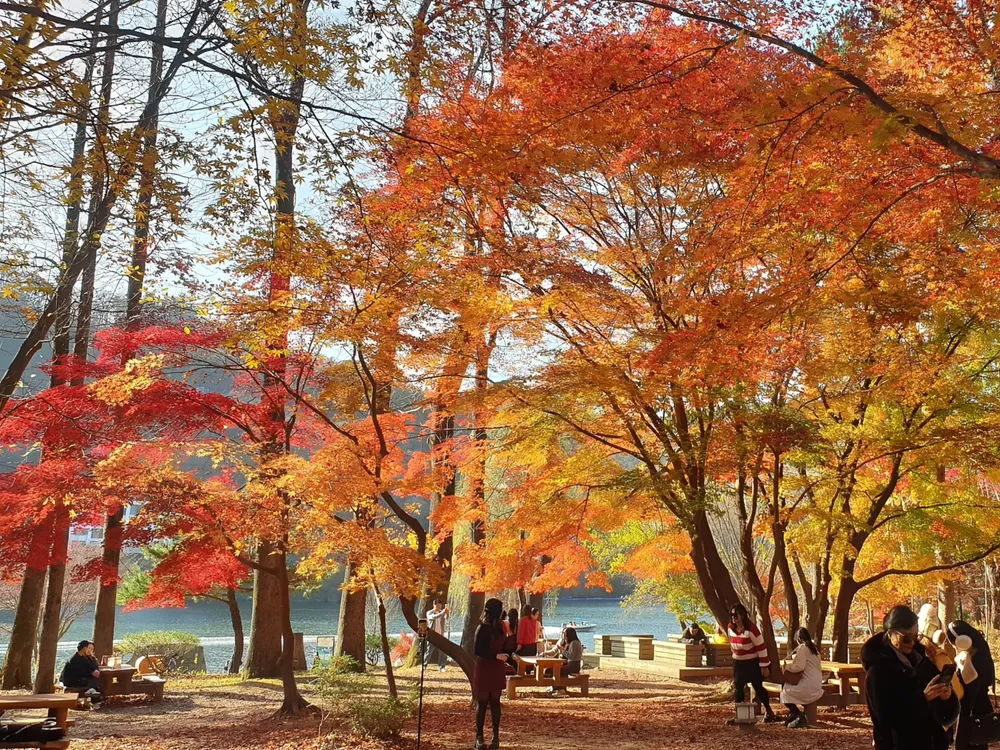
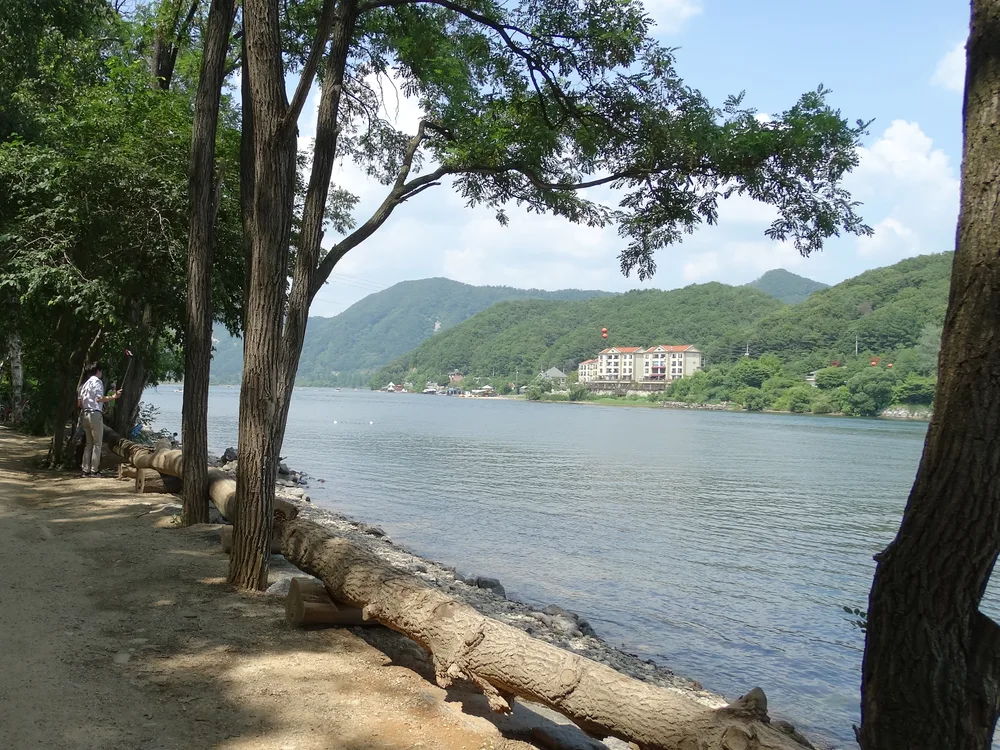
Nami’s tree avenues — ginkgo, metasequoia, pine — are the whole reason it’s famous, and in autumn they turn into gold-and-crimson tunnels. Peak is usually the last week of October into the first few days of November.
It’s also the busiest it gets all year. An autumn Saturday on Nami is genuinely crowded; go on a weekday, take the first ITX and the first ferry, and you’ll have the lanes to yourself for the first hour.
Nami Island (Naminara)
Gapyeong / Chuncheon, on the Han River
Golden ginkgo and metasequoia avenues, and the most reliable big autumn scene within 90 minutes of Seoul.
- Best time
- Last week of October to early November; a weekday, first ferry
- Getting there
- ITX-Cheongchun to Gapyeong, then a shuttle bus or taxi to the wharf, then a 5-minute ferry. Combined ferry-and-entry ticket around ₩16,000 — check current rates.
3. The Garden of Morning Calm
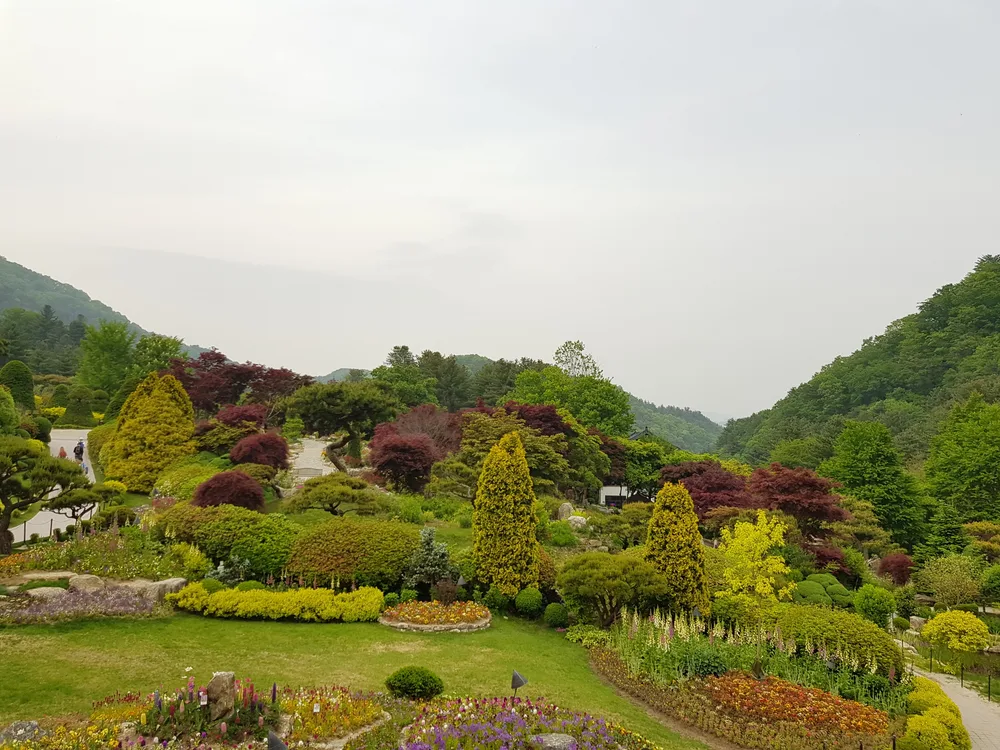
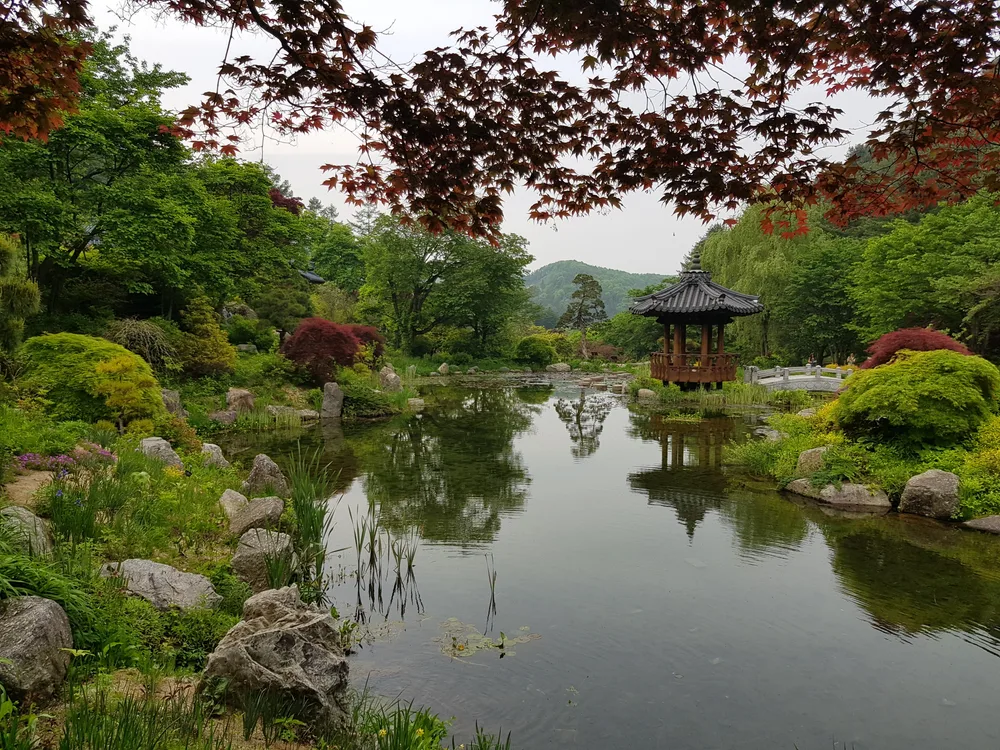
The photos above are the garden in spring — its layout, not its autumn colour.
In autumn this garden runs its biggest event of the year: a Chrysanthemum Exhibition with a few hundred varieties, alongside a maple festival, drifts of pink muhly grass, and golden ginkgo. It’s the low-effort pick — gentle paths, a lot of colour packed into a small area — and it sits close enough to Nami to do both in one day.
The Garden of Morning Calm
Gapyeong hills, near Cheongpyeong
A chrysanthemum show, a maple festival, and pink muhly grass, all on easy paths. Pairs with Nami for a full Gapyeong autumn day.
- Best time
- Mid-October into November
- Getting there
- Train to Cheongpyeong Station (Gyeongchun Line / ITX), then the Gapyeong City Tour Bus or a ~20-minute taxi. Adult admission is roughly ₩11,000 — confirm on the official site.
4. Bukhansan National Park
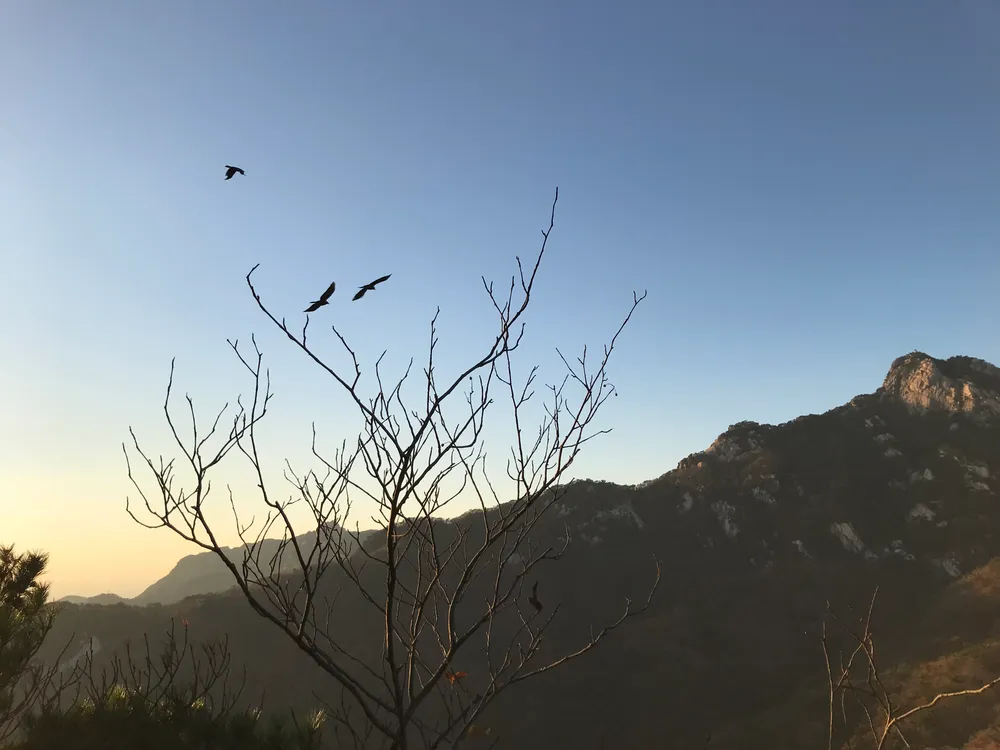
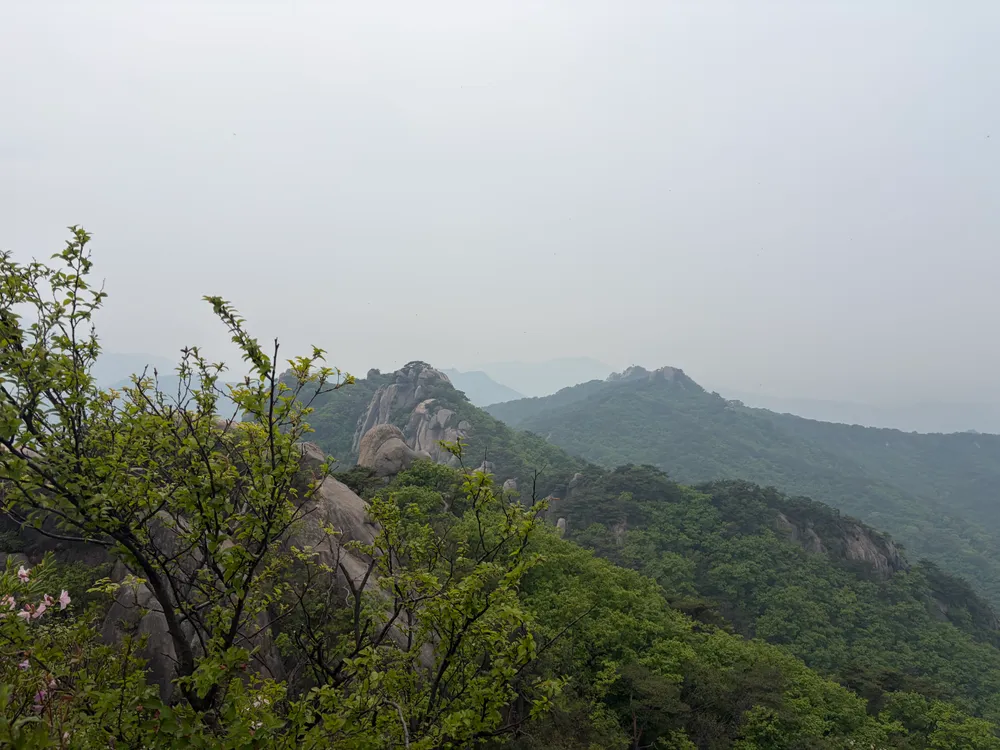
Bukhansan is the closest of these — a national park on the metro — and in mid-to-late autumn the lower trails run through maple and oak while the bare granite peaks stand above it. Climb high enough and you get colour and a view over the whole city.
You don’t need to summit; a half-day loop from a lower entrance is plenty. Autumn weekends are busy on the popular routes, so a weekday morning is much better.
Bukhansan National Park
Northern edge of Seoul (also Gyeonggi)
Maple and oak on the trails, granite peaks above, and a city panorama from the top — the only autumn pick you can reach on the subway and still call a hike.
- Best time
- Late October to early November. Weekday mornings.
- Getting there
- Metro to Gupabal (Line 3) then a bus to the Bukhansanseong trailhead, or the Bukhansan Ui LRT for the Ui valley side. Park entry is free.
5. Suwon Hwaseong Fortress
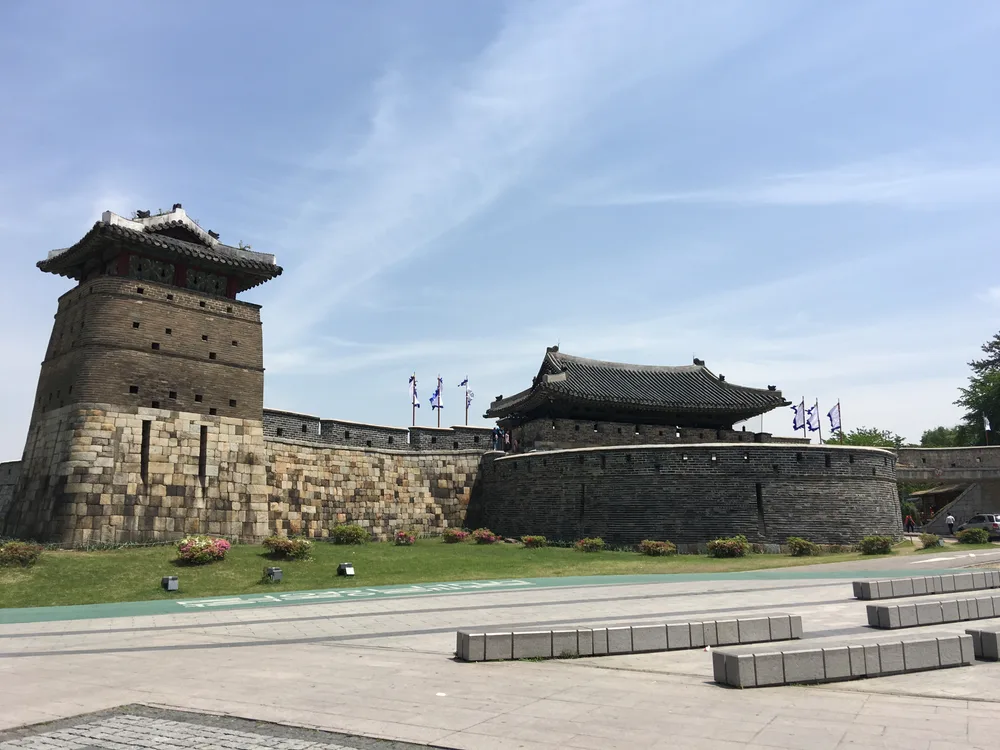
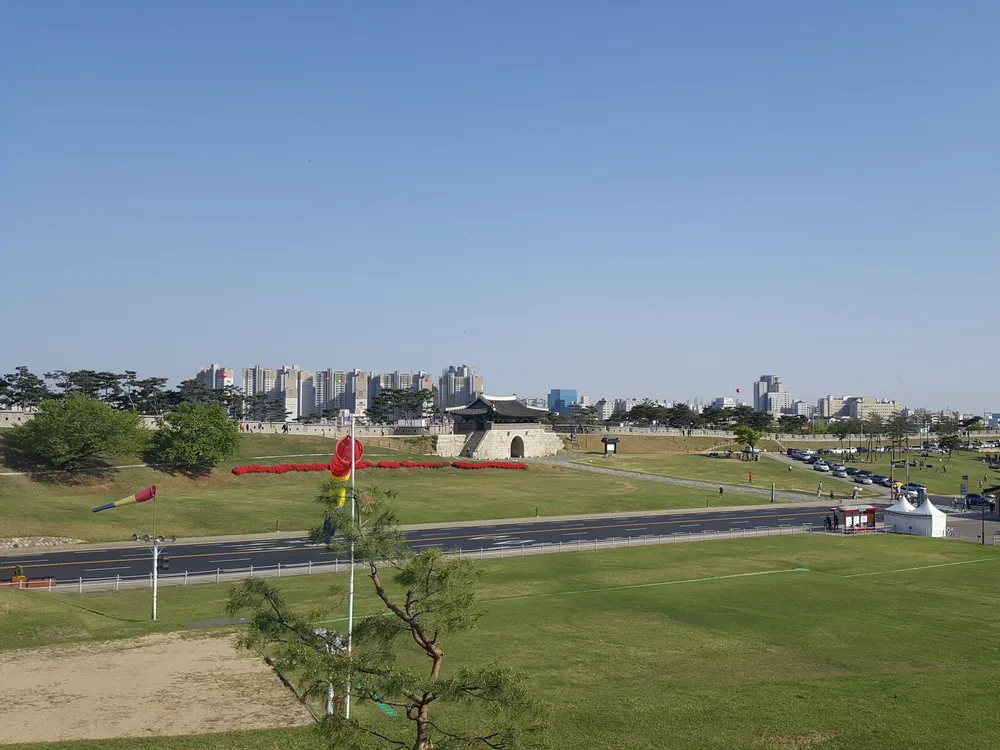
The photos above are the fortress in fair weather — the stonework, not its autumn colour.
Suwon’s UNESCO fortress wall is the shortest trip on this list, and in autumn the ginkgo and maple around Hwaseong Haenggung and up the Paldalsan hill turn while the walls themselves stay the same. It’s history plus foliage on a made path, an hour from central Seoul — the least dramatic option here, but also the easiest.
Hwaseong Fortress (화성)
Suwon, Gyeonggi Province
A 5.7 km fortress wall you can loop in a couple of hours, with autumn ginkgo and maple around the palace and the hill. Shortest transit of the five.
- Best time
- Late October to mid-November, morning
- Getting there
- Subway Line 1 to Suwon Station (~1 hr from central Seoul), then a local bus or ~15-min walk to Paldalmun gate. Walking the walls is free.
How to time the leaves
- Colour moves north-to-south and high-to-low. Seoraksan and the northern mountains peak first, from around mid-October; Seoul, Gapyeong and Suwon follow in the last week of October into early November.
- So the ideal autumn week is a split: the mountains (Seoraksan, or Bukhansan’s higher trails) mid-October, then the Gapyeong spots at the end of the month.
- Weekday, always. Autumn Saturdays at Nami and on the popular Bukhansan routes are the heaviest crowds of the year.
- Peak is short. A given spot holds good colour for maybe a week to ten days, and a storm can end it early. Watch a foliage forecast from late September.
My honest ranking
- Seoraksan — the best foliage by a distance, if you can give it the long day (or take the tour).
- Nami Island + the Garden of Morning Calm — the classic Gapyeong combo, and the most reliable colour close to Seoul.
- Bukhansan — colour plus a city view, and the only one you can do on a whim after breakfast.
- Suwon Hwaseong — history and foliage on the shortest trip out, if not the most spectacular.
Related reading
This is part of a season-by-season series — see Best Spring Day Trips from Seoul, Best Summer Day Trips from Seoul, and the year-round Best Day Trips from Seoul.
Sources
- Fall Foliage in Korea: Autumn Leaves Guide & Forecast 2026 — Odynovo (accessed 2026-08-28)
- Autumn Foliage Seoul 2026: Best Spots & Peak Dates — Seoul Tourism Guide (accessed 2026-08-28)
- Korea Autumn Foliage 2026: When & Where to See Fall Colors — Korea Insider (accessed 2026-08-28)
- Seoraksan — Wikipedia (accessed 2026-08-28)
- Nami Island (Naminara) — Wikipedia (accessed 2026-08-28)